
What Is a Toll Barrier System?
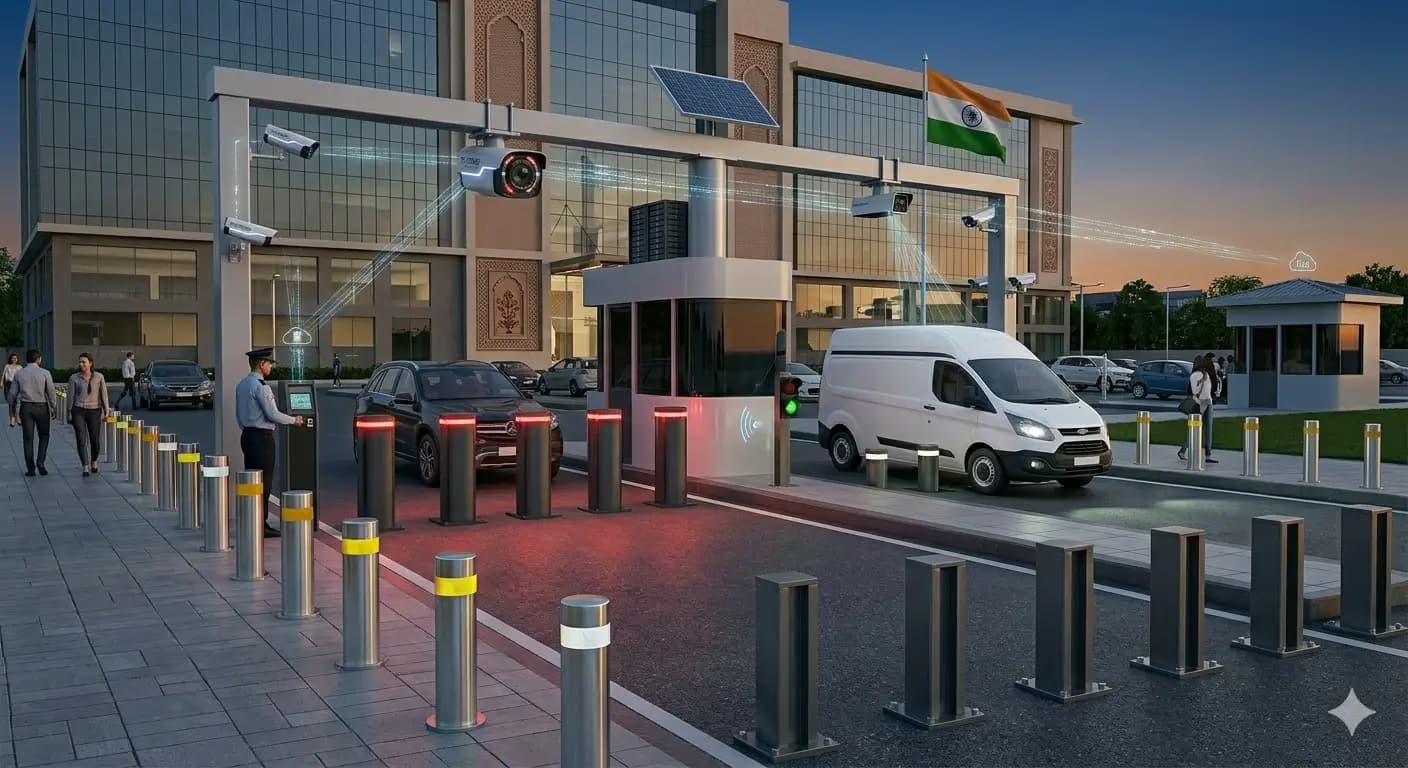
A toll barrier system is not a single device but a lane of cooperating subsystems — sensing, identification, computation, actuation and audit — in which the boom barrier is only the visible final step. Every lane must be able to answer, after the fact, which vehicle passed, what class it was judged to be, what was charged, and on what authority the arm lifted. That audit requirement shapes the whole design.
How Does a Toll Barrier System Work?
A toll barrier system works in five stages. Sensors classify the vehicle by its physical characteristics. A reader identifies it from its tag or a ticket. The lane controller computes and validates the toll against that class and the linked account. On a valid transaction it releases the barrier, which opens, allows the vehicle through and closes behind it. The transaction is then logged to the plaza server for settlement.
The Toll Lane Sequence Step by Step
| Step | What happens | How it works |
|---|---|---|
| 1 | Vehicle enters the lane approach | An entry loop or presence sensor registers arrival and opens a new lane transaction. |
| 2 | Vehicle is classified | Automatic Vehicle Classification sets the toll class from axle counters in the road, laser or light-curtain profilers, and loop signature analysis. The method varies by plaza; many combine two rather than rely on one. |
| 3 | Vehicle is identified | The gantry-mounted overhead reader interrogates the windscreen FASTag on the approach. Manual and hybrid lanes may use a ticket, card or operator entry instead. |
| 4 | Toll is computed | The lane controller applies the tariff for the determined class, with any local or return-journey rule held in the plaza configuration. |
| 5 | Payment is validated | The tag identifier is checked against account status: valid, active, not blacklisted, sufficient balance. |
| 6 | Barrier opens | The controller releases the barrier and updates the lane traffic light and status display. |
| 7 | Vehicle passes | An exit loop and photocell confirm the vehicle has moved through the barrier zone. |
| 8 | Barrier closes | The arm lowers once the lane is clear, timed so a following vehicle cannot tailgate through on the same transaction. |
| 9 | Transaction is logged | Class, tag identifier, amount, timestamp, lane, ANPR plate read and images go to the plaza server and onward to the central host. |
Where the sequence fails — no tag read, insufficient balance, a blacklisted tag, a disputed classification — the lane falls to an exception path. Handling that path well is what separates a plaza that flows from one that queues.
Main Components of a Toll Barrier System
| Component | Function |
|---|---|
| Overhead RFID gantry and reader | Spans the lane carrying reader and antennas, so the tag is read while the vehicle is still approaching. |
| AVC sensors | Axle counters in the road, laser or infrared profilers at the lane side, and loop signature electronics. |
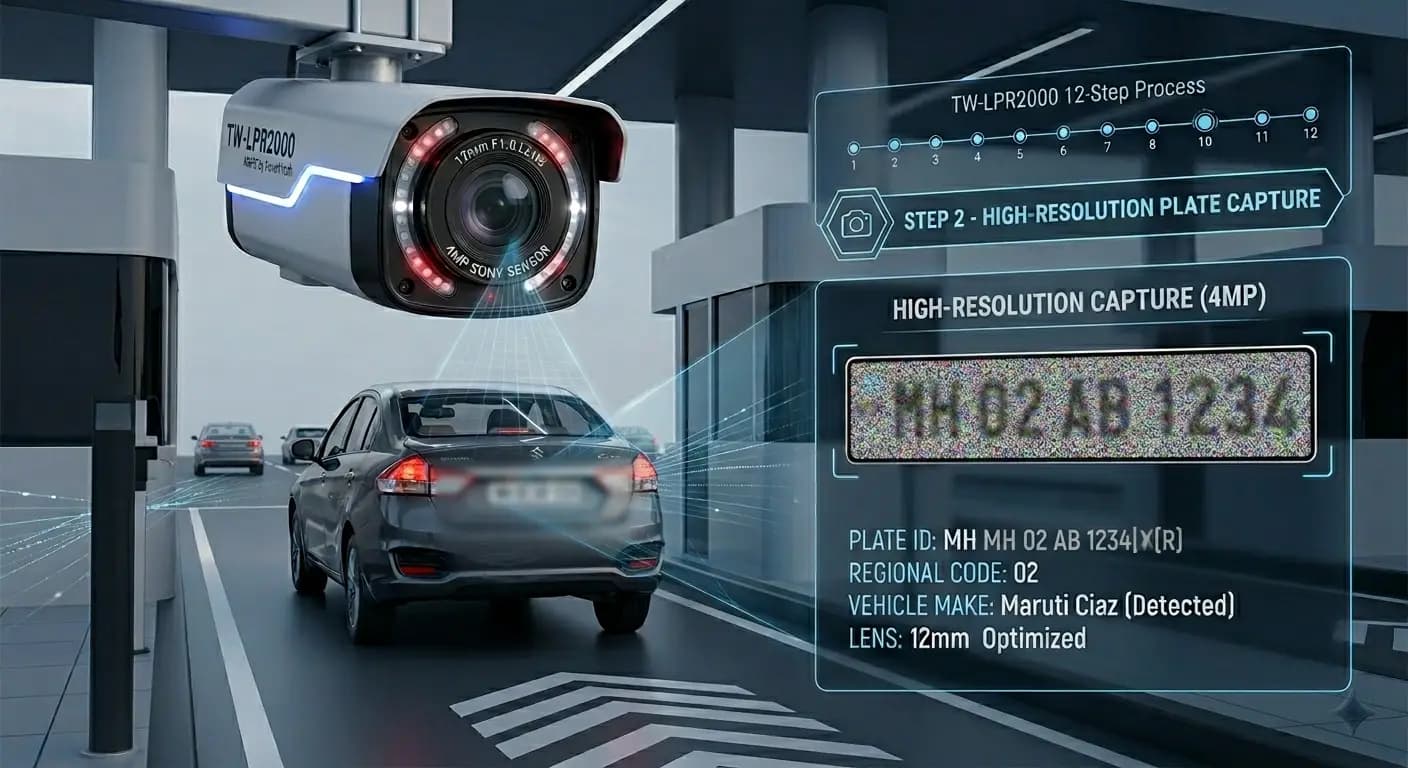
| ANPR camera | Reads the plate of every vehicle entering the lane for enforcement and reconciliation. |
| Lane controller | Sequences the transaction, applies the tariff, drives the barrier, talks to the plaza server. |
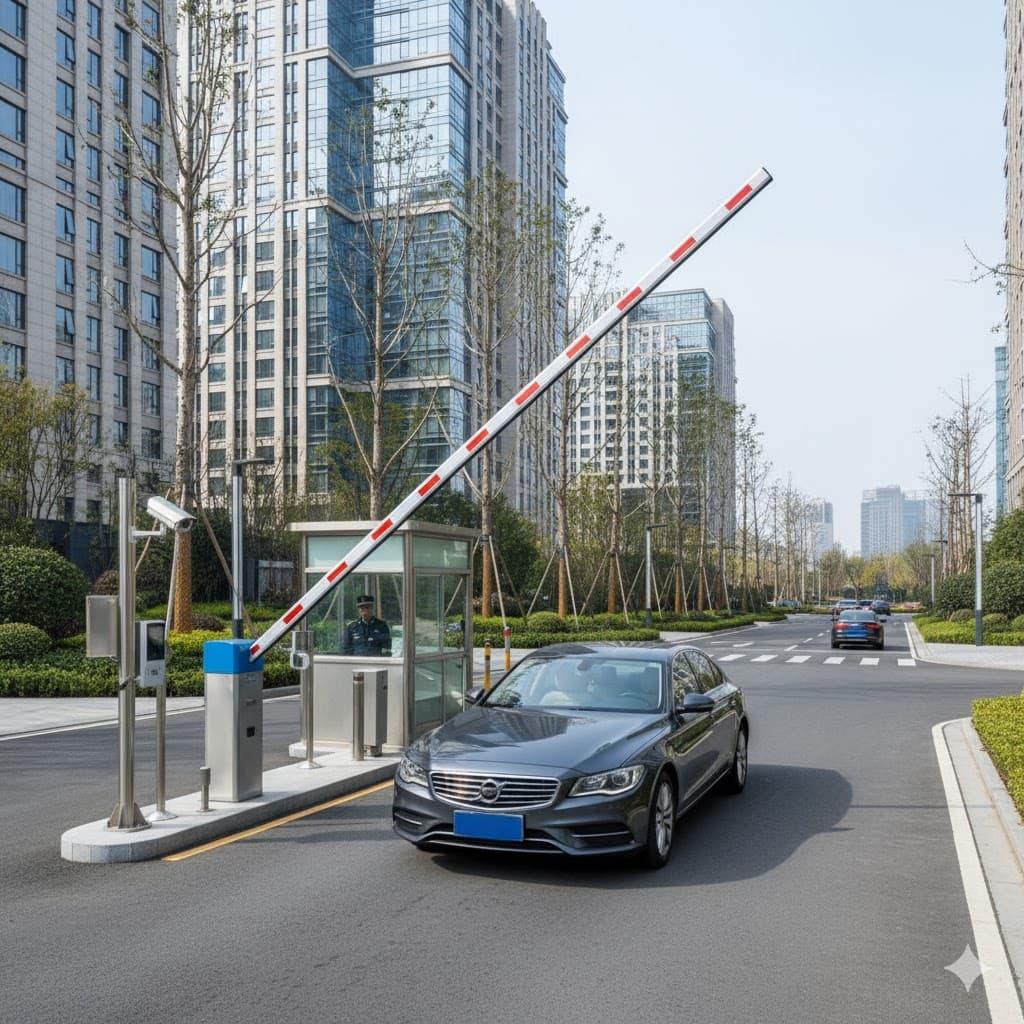
| Boom barrier | The physical release mechanism, generally a high-duty unit given toll cycle counts. |
| Traffic light and lane status display | Tells the driver whether the lane is open and whether the transaction succeeded. |
| Toll booth terminal | Operator position in manual and hybrid lanes: cash, exceptions and manual class override. |
| Overhead lane signage | Shows lane mode so drivers choose before committing to a lane. |
| Central host / plaza server | Aggregates lane transactions, holds tag status data, produces audit and settlement files. |
| UPS and power conditioning | Keeps the lane live through supply interruptions; losing power mid-transaction creates a reconciliation problem. |
The overhead gantry and RFID reader
The reader sits above the lane because a windscreen tag faces upward and forward. The read zone must cover the approach so identification completes before the barrier, yet stay tight enough not to pick up a tag in the next lane. Cross-lane reads are a real failure mode at closely spaced plazas, managed through antenna polarisation, power setting and shielding — the workable arrangement depends on the reader model and plaza geometry.
Automatic Vehicle Classification
Classification exists because the toll depends on what the vehicle is, not what its owner registered. Axle counters detect each axle crossing and can distinguish a lifted axle from a loaded one. Profilers measure height and silhouette. Loop signature systems analyse the shape of the inductance change as the vehicle crosses, which carries information about length and undercarriage. The combination used depends on traffic mix and the accuracy standard the plaza is held to.
ANPR as the enforcement layer
This is the point most often misunderstood. ANPR is not how the vehicle is identified for payment. The tag is. ANPR runs in parallel, capturing every plate whether or not the tag reads, and serves enforcement and reconciliation: recovering the toll after a failed read, evidencing insufficient-balance and blacklisted-tag events, and identifying vehicles that run the lane without a valid transaction. Treating ANPR as the primary identification method is a specification error, because plate reading is affected by plate condition, non-standard formats, obscuring and approach angle in ways a tag read is not.
Lane controller, barrier and driver signalling
The controller is the only component that sees the whole transaction, which is why it, not the barrier, holds the timing and safety logic. The barrier behaves like any other boom barrier: safety loop under the arm, photocell across the lane, obstruction reversal at the drive. What differs is duty rating and the tightness of the timing window.
How FASTag Works in India
FASTag is a passive UHF RFID tag conforming to the EPC Gen2 air interface, operating in the 865–867 MHz band allocated for RFID use in India. Passive means no battery: the reader radiates RF energy, the tag harvests enough to power its chip and backscatters its identifier. Read at several metres, the vehicle never stops to be identified.
The tag is mounted inside the windscreen and linked to a prepaid or bank account. Transactions run under the National Electronic Toll Collection framework and settle through NPCI, which is why a tag issued by one bank works at a plaza acquired by another. The lane does not hold the balance; it works against tag status data supplied to the plaza, so status changes are not always instantaneous at the lane.
Tag placement matters more than operators expect. A tag behind a metallised or heat-reflective windscreen reads unreliably or not at all, because the coating attenuates RF energy in both directions. The same applies to a tag on the wrong part of the glass, over a demister element, or reattached after being moved between vehicles. A lane with a poor read rate should be checked for fitment before the reader is suspected.
Manual, Hybrid and Dedicated ETC Lanes
| Aspect | Manual lane | Hybrid lane | Dedicated ETC / FASTag lane |
|---|---|---|---|
| Identification method | Operator entry, cash or card at the booth; class set manually or from AVC | Tag read if present, otherwise a booth transaction; AVC runs either way | Tag read only, with ANPR as the enforcement record |
| Throughput | Lowest — every vehicle stops for a manual transaction | Intermediate and variable — depends how many vehicles read cleanly | Highest — vehicles pass without stopping when the read succeeds |
| Staffing | Operator whenever the lane is open | Operator required, idle on successful tag transactions | Unstaffed in normal operation; exception staff at plaza level |
| Typical use | Exceptions, oversize and exempt vehicles, mixed legacy traffic | Transitional lanes and variable traffic composition | Main through lanes where tag penetration is high |
The distinction that matters operationally is what each lane does when a transaction fails. A dedicated lane has no local resolution path, so a failure blocks it until the vehicle is dealt with. A hybrid lane resolves the failure in place but runs slower on average. Plaza design therefore has to settle not just how many lanes of each type are needed, but where a vehicle that cannot complete a transaction physically goes.
How Toll Barrier Timing Is Set
Barrier timing here is a tighter trade-off than anywhere else boom barriers are used. The arm must drop quickly enough that a closely following vehicle cannot tailgate through on a single transaction, since that is both a revenue loss and an audit discrepancy — but not so quickly that it strikes the vehicle that has just paid.
The resolution is the layered protection used on any boom barrier: a safety loop beneath the arm inhibiting closure while a vehicle is present, a photocell across the lane that stops and reverses on obstruction, and obstruction detection at the drive. Closing is triggered by the exit loop de-energising rather than a fixed timer, so the arm follows the actual vehicle. Exact opening and closing times are a specification of the barrier model and its duty rating.
What Actually Limits Toll Lane Throughput
Throughput is limited by read reliability at the gantry, not by barrier speed — which is where most plaza troubleshooting goes wrong. A lane reading reliably at 95 per cent does not spend 95 per cent of its time running smoothly; it spends its time handling the other 5 per cent, because each failed read turns a three-second pass into a manual intervention with a stopped vehicle and a queue behind it. Making the barrier faster changes very little. Raising the read rate changes everything.
The largest real-world lane blocker is not tag failure but insufficient tag balance. The vehicle is identified perfectly — reader has the tag, account is known, class is settled — and the transaction still cannot complete, because the account cannot pay. The system has done its job; the question is where that vehicle goes next and how fast it clears the through lane. That is plaza design, not technology.
The other routine friction is reconciliation between classification and registration. AVC reports what the vehicle physically is; the tag reports what it was registered as. A tag registered for a car and fitted to a light commercial vehicle produces a mismatch the lane must resolve, and it is a common source of dispute at the booth and in later audit. Plazas handle it with defined override procedures and by retaining the AVC evidence and images with the transaction record.
Where Toll Barrier Systems Are Used
The obvious application is the highway network, where the expressway corridors of Maharashtra, Gujarat and Rajasthan carry heavy long-distance traffic and the routes across Uttar Pradesh and Madhya Pradesh link the northern and central networks. Plazas on the approaches to Mumbai, Delhi, Ahmedabad and Jaipur see a traffic mix that shifts sharply between commercial peaks and weekend movement, which is exactly what makes lane-type allocation difficult.
The same architecture appears wherever a charge is levied for passage: bridge and tunnel crossings, the ring roads and bypasses around Pune, Bengaluru, Surat and Nagpur, industrial estate and port approaches in Gujarat and Karnataka where charging is linked to a weighbridge, and airport forecourts and large parking operations across Haryana and the surrounding region, where the tariff comes from duration rather than distance. TimeWatch India supplies boom barriers, long-range RFID readers and ANPR equipment used in such lanes, alongside its wider parking and traffic control range.
Integration With Other Systems
- Central host and settlement — lane transactions flow upward for clearing, reconciliation and reporting.
- ANPR and video management — plate reads and images bound to the transaction, so any passage can be reviewed from its log entry.
- Weighbridges — the barrier releases only after weighment is recorded.
- Traffic management and variable message signs — lane status and queue data fed to approach signage.
- Parking platforms — duration-based charging on the same hardware; see how a parking management system works.
Installation Considerations
- Gantry position and antenna aiming — fix the read zone at design stage and verify adjacent lanes do not cross-read.
- AVC sensor geometry — accuracy depends on the vehicle crossing counters, profilers and loops in a known order.
- Lane channelisation — kerbs and islands that hold vehicles in lane through the read zone improve both read rate and classification accuracy.
- ANPR camera mounting — height, angle and illumination are design decisions, not later adjustments.
- Loop cutting workmanship — slot depth, turn count and sealing; loop faults cause erratic lane behaviour and are almost always workmanship.
- Earthing, surge protection and UPS sizing — exposed electronics on long runs, riding through interruptions without losing a live transaction.
- Barrier duty rating — specify against projected cycle count, typically far above a commercial gate.
Maintenance Considerations
- Track lane read rate as a metric; a decline is the earliest warning of a reader or alignment problem.
- Verify AVC classification against a sampled manual count at defined intervals.
- Clean ANPR housings and confirm IR illuminator function after dust and monsoon periods.
- Test loop continuity and insulation, especially after resurfacing of the plaza apron.
- Inspect the arm for impact damage, check balance spring tension, confirm photocell alignment.
- Confirm the safety loop still inhibits closing, and test the manual release before it is needed.
Benefits and Limitations
- Non-stop passage when the tag reads, reducing queueing and stop-start plaza traffic.
- Complete audit trail — every passage timestamped, classified and image-backed.
- Consistent classification applied by sensor rather than operator judgement, and interoperability across participating plazas under the NETC framework.
- Not a security device — a boom arm will not stop a vehicle driven through it; lane-running is handled after the fact, which is what the ANPR layer exists for.
- Read reliability governs everything, and account balance failures sit outside the system's control, to be absorbed by plaza layout and procedure.
- Performance varies by equipment — read range, classification accuracy, barrier timing and capture rates are specifications of the particular models and plaza geometry, and should be confirmed against datasheets and site testing rather than assumed.
Toll Barrier vs Standard Boom Barrier
| Aspect | Toll barrier lane | Standard boom barrier gate |
|---|---|---|
| Primary purpose | Charge computation, payment validation and auditable release | Access authorisation and passage recording |
| Identification | Tag read at range with ANPR enforcement backstop | RFID, ANPR, card, ticket or manual button |
| Classification | Required — the charge depends on vehicle class | Usually not required |
| Duty cycle | Very high; specified accordingly | Low to medium at most sites |
| Consequence of error | Revenue loss and an audit discrepancy | An access event to be reviewed |
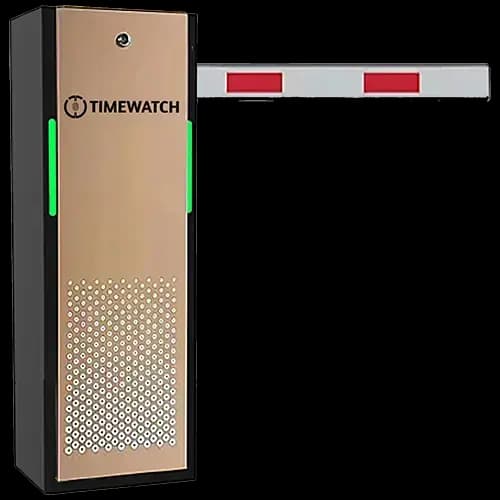
The mechanism at the arm is the same; what differs is everything upstream. A boom barrier gate specified for a campus entrance will not survive a toll lane's cycle count, and a toll lane's decision chain would be redundant at a campus entrance.
Frequently Asked Questions
How does a toll barrier system work?
A toll barrier system classifies the approaching vehicle, identifies it by reading its FASTag or issuing a ticket, computes the toll for that class and validates it against the linked account, then opens the boom barrier. Once the vehicle has passed and the lane is clear the barrier closes, and the transaction is logged to the central host.
How does FASTag work at a toll plaza?
FASTag is a passive UHF RFID tag fitted inside the windscreen. An overhead reader on the lane gantry radiates RF energy as the vehicle approaches, and the tag draws power from it to send back its identifier. The lane controller checks that identifier against account status, and if the tag is valid, active and funded the barrier opens.
What frequency does FASTag use in India?
FASTag operates on passive UHF RFID in the 865 to 867 MHz band allocated for RFID use in India, using the EPC Gen2 air interface. It runs under the National Electronic Toll Collection framework and settles through NPCI, which is why a tag issued by one bank is accepted at plazas acquired by another.
What is Automatic Vehicle Classification at a toll plaza?
Automatic Vehicle Classification, or AVC, determines a vehicle's toll class from its physical characteristics rather than from what it declares. Plazas use axle counters set into the road, laser or light-curtain profilers that measure height and silhouette, and loop signature analysis. The methods vary by plaza, and many sites combine two of them.
Is ANPR used to charge the toll?
No. The tag read is the primary identification method for payment. ANPR runs alongside it as the enforcement and reconciliation layer, capturing the plate of every vehicle entering the lane. Its output is used where the tag did not read, where the balance was insufficient, where a tag was blacklisted, and where a vehicle ran the lane without a valid transaction.
What happens if a FASTag has insufficient balance?
The vehicle is identified correctly but the transaction cannot complete, so the barrier does not release on a normal electronic transaction. The lane falls back to its exception path, which in a hybrid lane means resolution at the booth. Insufficient balance rather than tag failure is the most common real-world cause of a blocked toll lane.
What is the difference between a dedicated FASTag lane and a hybrid lane?
A dedicated electronic lane accepts only tag transactions and is unstaffed in normal operation, giving the highest throughput but no local way to resolve a failed transaction. A hybrid lane accepts a tag read if one is available and otherwise processes the vehicle at the booth, which resolves exceptions in place but runs slower on average and needs a permanently staffed position.
How fast does a toll barrier close?
Fast enough to prevent a following vehicle tailgating through on one transaction, but not so fast that it strikes the vehicle that has just paid. Closing is normally triggered by the exit loop de-energising rather than by a fixed timer, with a safety loop and photocell preventing closure on a vehicle. The exact timing is a specification of the barrier model.
Why does a FASTag sometimes not read?
The most common cause is fitment rather than the tag itself. A tag behind a metallised or heat-reflective windscreen reads unreliably because the coating attenuates RF energy in both directions. A tag on the wrong part of the glass, over a demister element, or reattached after being moved between vehicles will also read poorly.
Why do toll lanes queue even when the barrier is fast?
Because throughput is governed by read reliability at the gantry, not by barrier speed. A lane reading reliably at 95 per cent spends its time handling the other 5 per cent, and each failure turns a non-stop pass into a stopped vehicle and a manual intervention. Raising the read rate reduces queueing far more than making the barrier move faster.
