
What Is a UHF RFID Reader System?
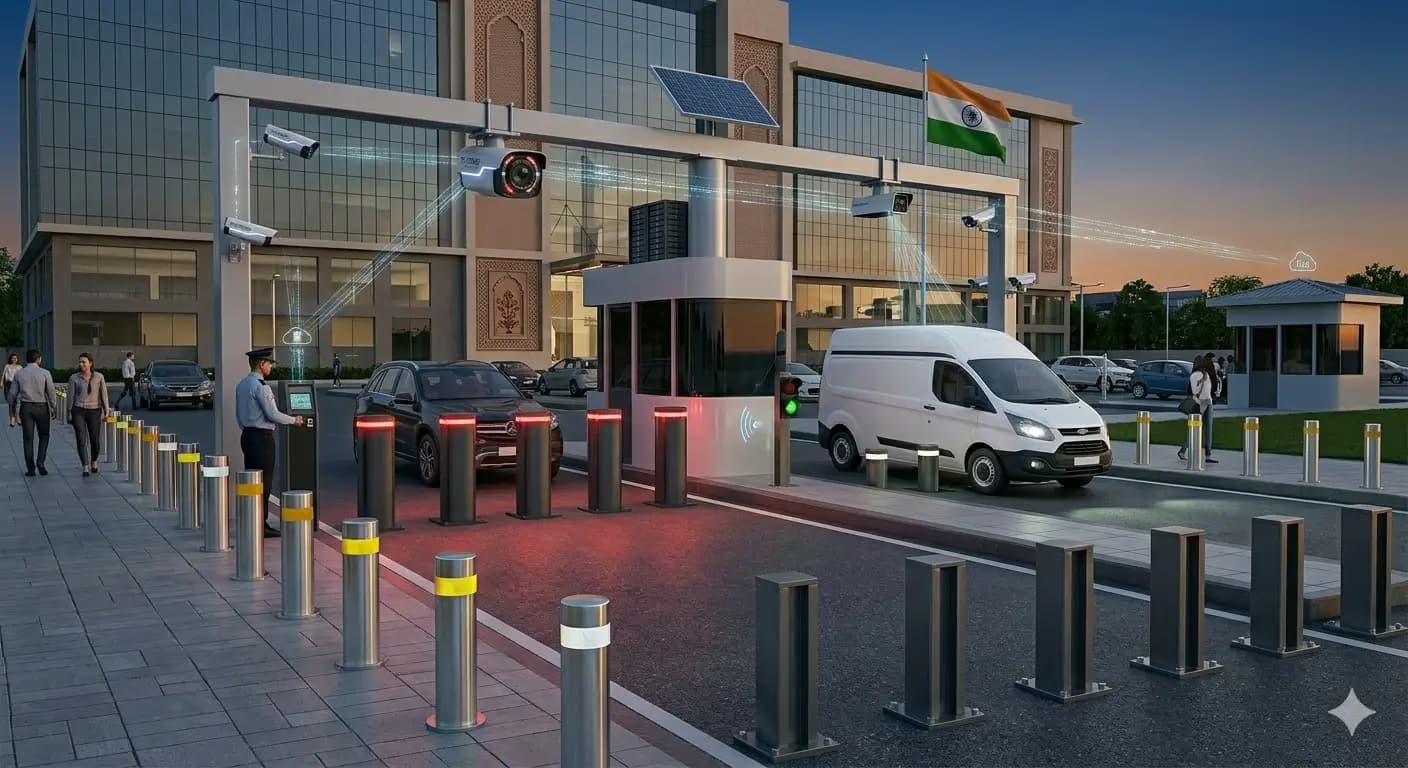
Unlike a card that must be tapped, a UHF system identifies things while they are moving — a vehicle approaching a gate, a pallet crossing a dock door, linen wheeled through a corridor. That is the commercial point of the technology, and everything difficult about deploying it follows from the same property.
How Does a UHF RFID Reader System Work?
A UHF RFID reader system works in four stages. The reader transmits RF energy through coaxial cable to one or more antennas, which radiate it into a defined area. A passive tag entering that area harvests enough energy to wake its chip. The chip replies by backscatter, modulating how much energy it reflects so the reflection carries its identifier. The reader decodes the returned signal into an EPC number and passes it to a controller or host application.
Everything below is detail beneath those four stages: transmit, harvest, backscatter, decode.
The Working Principle: Energy Harvesting and Backscatter
How a passive tag powers itself
A passive tag is an antenna on a substrate with a small chip bonded to it — no battery, no oscillator. In the reader's field, an alternating voltage appears across the antenna terminals. A rectifier, in practice a multi-stage charge pump, converts it to a small DC supply that accumulates on a capacitor until the chip's logic comes out of reset. The tag exists, electrically, only while it sits in a field strong enough to power it. Read range is therefore a property of the installation, not of the tag alone.
What backscatter actually means
Generating a carrier would require far more energy than the tag has harvested, so it cannot transmit in the ordinary sense. Instead it switches its own antenna between two impedance states: in one it reflects more of the incoming energy, in the other less. Switching in a timed pattern imposes its data onto the energy it is already bouncing back. The reader transmits and listens at once, sees its own carrier returning with a faint pattern superimposed, and decodes the bits.
Why UHF reaches metres when HF reaches centimetres
LF and HF systems work by inductive coupling: the reader coil produces a magnetic field and the tag coil sits inside it like a transformer secondary. That coupling falls away sharply with distance, which is why 125 kHz and 13.56 MHz readers work at centimetres and need the card presented. UHF works by radiative coupling. At 865 to 867 MHz the wavelength is roughly 35 cm, short enough for a compact antenna to radiate efficiently, and the tag is illuminated by a propagating wave rather than held in a magnetic field. The same property that gives the range also gives the problems: radiated energy reflects off metal, is absorbed by water, and travels past the point you intended it to stop.
LF vs HF vs UHF RFID: What Each Frequency Does
| Aspect | LF — 125 kHz | HF — 13.56 MHz | UHF — 865-867 MHz (India) |
|---|---|---|---|
| Coupling method | Inductive, near field | Inductive, near field | Radiative, far field |
| Typical read range | A few centimetres | Around 10 cm in access use | Metres, depending on antenna and tag placement |
| Metal and liquid tolerance | Good | Moderate; some detuning near metal | Poor without design allowance — metal reflects, water absorbs |
| Multi-tag reading | Generally one at a time | Possible but limited | Designed for it; anti-collision resolves large populations |
| Typical use | Animal tagging, proximity cards, immobilisers | Access and smart cards, payment, NFC | Vehicle access, toll, parking, inventory, asset and linen tracking |
Frequency choice is not about one band being better. It is about whether you need a deliberate presentation gesture at close range, or identification of something moving past at a distance.
Main Components of a UHF RFID Reader System
| Component | Function |
|---|---|
| Reader (fixed) | Generates the RF carrier, drives multiple antenna ports, decodes backscatter and outputs tag data over the network. |
| Reader (integrated) | Reader and antenna in one housing — simpler to mount and cable, less flexible in aiming and port count. |
| Antennas | Radiate the field and capture the returning backscatter. Gain and polarisation define the read zone. |
| Coaxial cable | Carries RF between reader and antenna. Every metre loses signal, in both directions. |
| Passive tags | Windscreen sticker, hard tag, on-metal tag or label — chosen by mounting surface, not preference. |
| Middleware / controller | Filters, de-duplicates and time-stamps raw reads, turning a read stream into discrete events. |
| Host software | Access control, parking, inventory or asset platform holding the tag-to-identity mapping. |
| Output interface | Relay, Wiegand, RS-485 or network message to a barrier controller, door controller or server. |
How Does a UHF RFID Reader System Work Step by Step?
| Step | What happens | How it works |
|---|---|---|
| 1 | Reader energises the antenna | An RF carrier in the 865 to 867 MHz band is delivered through coaxial cable to the antenna port. |
| 2 | Antenna radiates a field | Gain and polarisation shape that energy into a read zone covering the lane, doorway or shelf. |
| 3 | Tag enters the field | A windscreen tag, hard tag or label on the vehicle or item crosses into the illuminated area. |
| 4 | Tag harvests energy | Induced voltage is rectified to DC by a charge pump and accumulates until the chip powers up. |
| 5 | Reader runs an inventory round | The reader issues a query specifying a number of reply slots; each powered tag picks one at random. |
| 6 | Tag replies by backscatter | In its slot the tag switches antenna impedance in a timed pattern, modulating the reflected energy. |
| 7 | Reader decodes the identifier | The receiver extracts the modulation from its own returning carrier and resolves the EPC number. |
| 8 | Tag is singulated and silenced | The reader acknowledges the tag, which stays quiet so the remaining tags can be resolved. |
| 9 | Middleware filters the stream | Repeat reads collapse into one event; weak or out-of-zone reads are discarded. |
| 10 | Host application acts | The identifier is matched to a record and an output opens the barrier, releases the door or updates stock. |
How the Reader Handles Many Tags at Once
If twenty tagged cartons pass a dock door together, every powered tag would answer the same query at the same instant and the replies would collide. EPC Gen2 solves this with a slotted ALOHA-based anti-collision protocol, described through its Q parameter. The reader opens a round by announcing a number of reply slots; each tag picks one at random. A slot holding exactly one tag produces a clean reply, which the reader acknowledges before silencing that tag for the rest of the round. Collisions are retried, empty slots waste a little time, and the reader adjusts the slot count between rounds until the population is resolved. Isolating one tag at a time from a crowd is called singulation, and it is what lets hundreds of tags be inventoried in a second or two.
How the Read Zone Is Shaped
A read zone is not a sphere around the antenna. It is a shaped volume, and shaping it deliberately is most of the engineering work in a UHF installation.
Antenna gain and mounting angle
Gain does not create energy, it concentrates it. A higher-gain antenna produces a narrower, longer beam from the same power; a lower-gain one produces a wider, shorter beam. Mounting angle decides where that beam lands. Aimed down the lane it reads vehicles far away, including ones you did not want. Angled downward toward the road a few metres ahead of the barrier, the same antenna reads the vehicle at the stop line and little else.
Circular and linear polarisation
A linearly polarised antenna concentrates energy in one plane: range is longer when the tag's orientation matches that plane and collapses when it does not. A circularly polarised antenna sweeps the plane continuously, coupling to a tag at any rotation at roughly half the effective range. The choice follows from whether orientation is predictable. A windscreen tag sits in a known, fixed position on every vehicle, so linear polarisation is reasonable. A hand-carried tag, a carton on a pallet or an asset tag arrives at any angle, and circular is the pragmatic answer.
Transmit power and coaxial cable loss
Transmit power is set within the limits permitted for the band, but the power reaching the antenna is always less than what leaves the reader, because coaxial cable has loss — and that loss is paid twice, on the outgoing carrier and again on the very weak returning backscatter. A long run between a reader mounted conveniently in a control room and an antenna at a distant gate can lose enough signal to measurably shorten read range. Reader placement is a design decision, not a convenience; where the electronics cannot come close to the antenna, the alternatives are lower-loss cable or an integrated reader at the read point.
Why Tags Fail to Read: Metal, Water and Orientation
Metal detunes and reflects. A tag antenna is designed for a particular electrical environment. Place a standard label directly on metal and the metal changes its impedance, destroying the match and reflecting the field away, so the tag reads poorly or not at all. On-metal tags exist as a distinct product class for this reason: they carry a spacer or ground plane so the antenna works against a conductive backing.
Water absorbs. At UHF, water absorbs RF strongly. Tags on liquids, on produce, on laundry bundles or close to a human body read at much shorter distances than the same tags in free air, so trolley and bundle geometry matters as much as the tag specification.
Orientation decides coupling. A tag presented edge-on to a linearly polarised field couples badly however good it is. Windscreen tags are designed for glass and a known mounting position; moving one to a metal-framed window or a different vehicle class changes its behaviour. Tag selection is an engineering choice driven by mounting surface and read geometry, and a trial on the actual material in the actual position is worth more than any datasheet range figure.
Duplicate Reads and the Job of the Middleware
A tag inside a read zone is not read once. It is read many times per second for as long as it stays there, so one vehicle waiting at a barrier can generate hundreds of reads of the same identifier. Deciding which of those constitute a single event is the job of the middleware, not the reader. Typical rules include a debounce window suppressing repeat reads of the same tag, a signal-strength threshold ignoring weak reads from outside the intended zone, a minimum read count before an event is declared, and antenna-port logic inferring direction from which antenna saw the tag first. Without this layer a parking system logs one vehicle arriving hundreds of times.
Technologies Used in a UHF RFID System
- Radiative RF coupling — propagating waves in the 865 to 867 MHz band allocated in India.
- Passive energy harvesting — rectifier and charge pump circuits producing DC from the received field.
- Backscatter modulation — impedance switching at the tag antenna to impose data on the reflected carrier.
- EPC Gen2 air interface — the command set, encoding and memory structure standardised as ISO 18000-63.
- Slotted ALOHA anti-collision — the Q algorithm resolving many tags through randomised reply slots.
- Antenna design — gain, beamwidth and polarisation determining read zone geometry.
- Network and controller interfaces — TCP/IP, RS-485, Wiegand or relay outputs into host systems.
Where UHF RFID Reader Systems Are Used
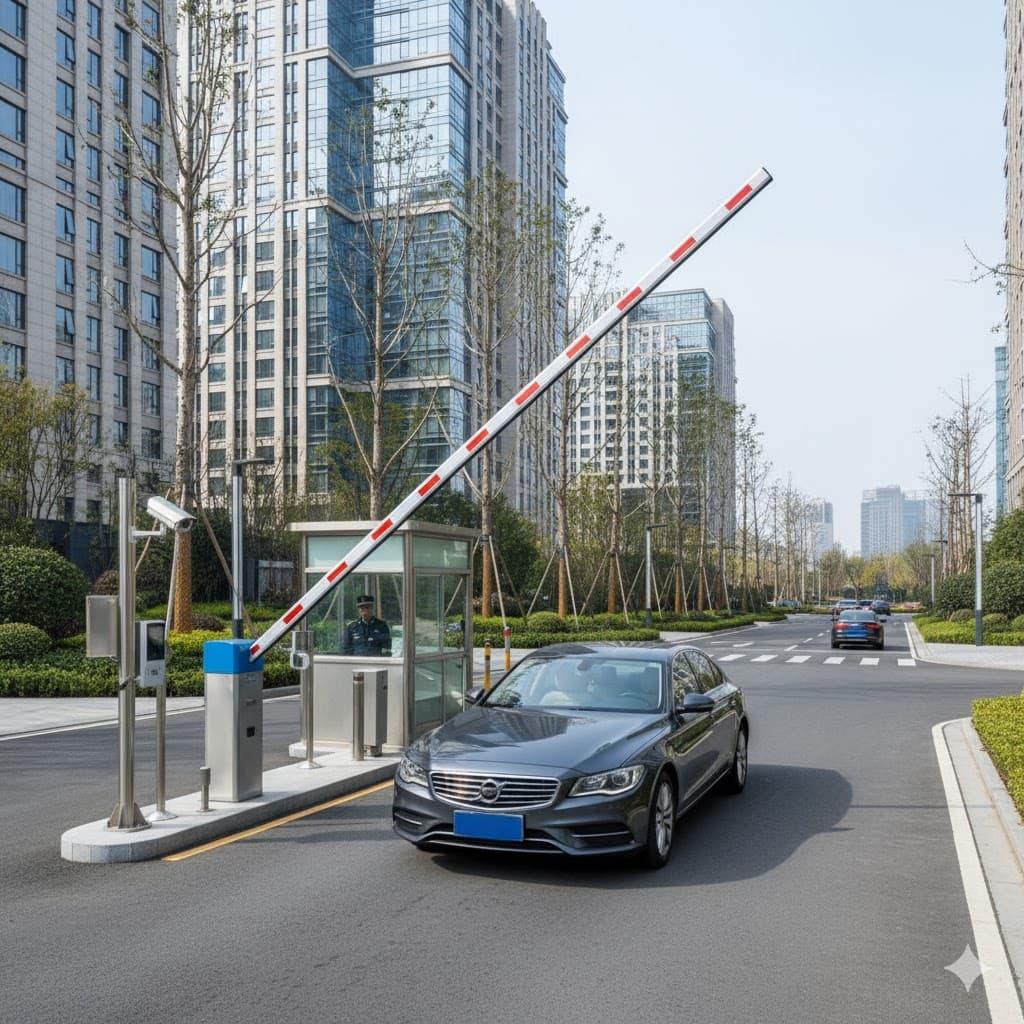
- Vehicle access control — windscreen tags read on approach, so the gate is already opening. Standard at corporate campuses and gated developments in Gurugram, Noida and the technology corridors of Karnataka and Telangana.
- Parking management — residents and staff identified without stopping, visitors handled by ticket or plate recognition.
- Toll and dedicated lanes — high-speed identification where windscreen tag orientation is consistent and read geometry can be tightly controlled.
- Asset tracking — equipment, tools and returnable containers inventoried by walking a handheld reader through a room.
- Warehouse and retail inventory — dock-door portals and shelf readers across the logistics hubs of Maharashtra and Gujarat.
- Personnel access — long-range identification at industrial gates, alongside card or biometric readers rather than in place of them.
- Laundry and linen management — wash-resistant tags sewn into hotel and hospital linen and counted in bulk, used by hospitality operators in Chennai, Bengaluru and Pune.
- File and document tracking — tagged files located in registries and administrative campuses in Haryana, Punjab and Chandigarh.
- Manufacturing work-in-progress — components identified at each station across the industrial belts of Tamil Nadu and the engineering clusters around Hyderabad.
TimeWatch India supplies, installs and services UHF RFID readers, antennas and tags alongside the barrier, parking and access control equipment used with them.
Integration With Other Systems
- Boom barriers and gates — a valid read produces the open command, with the barrier's own safety devices governing closing.
- Access control platforms — vehicle tag and cardholder share one database, so revoking a person closes both door and gate.
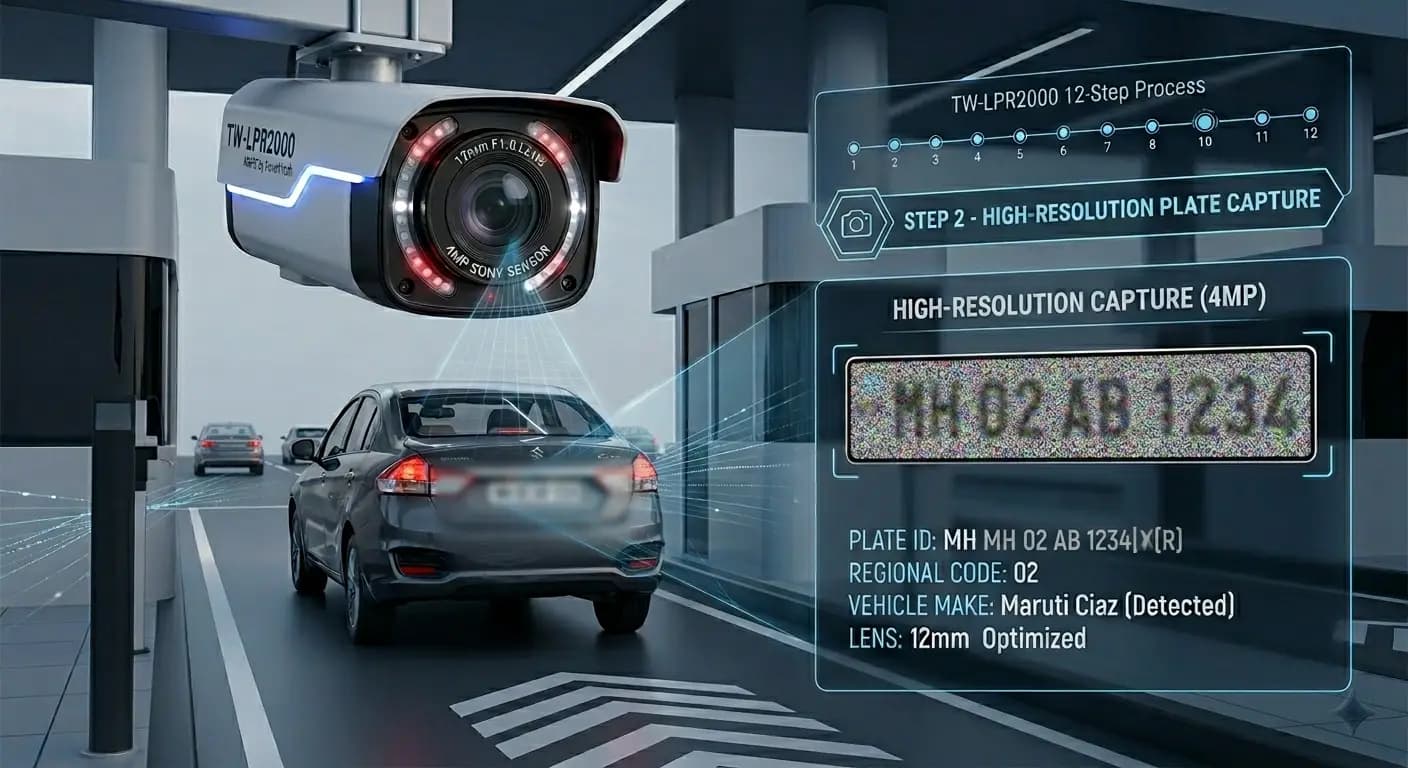
- ANPR cameras — plate recognition confirming the tag is on the vehicle it was issued to, or handling untagged visitors.
- Parking management software — occupancy counting, slot allocation and shift reporting driven by entry and exit events.
- CCTV — each read event bookmarks video, so any passage can be reviewed from its log entry.
- ERP and asset registers — inventory reads reconciled against the system of record automatically.
- Weighbridges — the tag identifies the vehicle so the weighment is recorded against the right trip.
Installation Considerations
- Define the read zone before choosing hardware. Decide where a tag must read and where it must not, then select gain, polarisation, angle and power to produce that volume.
- Control over-reading. Reading the adjacent lane or a vehicle queued behind is the commonest failure in vehicle installations, and it is solved with polarisation, downward antenna angle, reduced power, signal thresholds and physical shielding — not with different tags.
- Keep the cable run short, or accept a measurable range penalty.
- Match the tag to the surface. Glass, metal, plastic and fabric each need a different tag construction.
- Survey for reflective structures. Metal shutters, steel canopies and parked vehicles can create read points where none was intended.
- Avoid reader-to-reader interference. Readers at adjacent lanes need separation, synchronisation or channel planning.
- Protect outdoor electronics with correct enclosure rating, earthing and surge protection on long cable runs.
- Commission with real traffic at the speeds, orientations and vehicle mix the site will actually see.
Maintenance Considerations
- Inspect antenna mounting and aim — an antenna knocked or loosened changes the read zone silently.
- Check coaxial connectors for water ingress and corrosion, the usual cause of gradual outdoor range loss.
- Review read statistics periodically; a falling read rate usually indicates a physical change, not a software fault.
- Replace damaged or delaminated tags. Windscreen tags are destroyed on removal, so a replaced windscreen means a replaced tag.
- Re-verify middleware filtering rules after any change to lane layout, traffic flow or reader placement.
- Keep firmware current and record configuration so a replacement unit can be commissioned identically.
Benefits and Limitations
Benefits
- Identification without stopping, aligning or presenting a credential.
- Many tags resolved in one pass, which makes bulk counting practical.
- Passive tags need no battery and no servicing.
- No line of sight required, so a tag inside a carton or behind a windscreen still reads.
- Events feed directly into access control, parking and asset systems with a timestamped record.
Limitations and considerations
- The tag identifies the tag, not the driver. A windscreen tag authorises the vehicle whoever is driving. Where the person matters, pair it with card, biometric or plate verification.
- Read zones leak. Radiated energy does not stop at a painted line, and containing it is design work at every site.
- Metal and liquid degrade performance unless tag type and mounting are chosen for them.
- Range figures are conditional, assuming favourable orientation, free space and full transmit power.
- Middleware is not optional. Without filtering, the raw read stream is unusable as an event source.
Exact behaviour — read range, antenna ports, supported protocols, output interfaces and environmental rating — depends on the specific reader, antenna, tag and site configuration, and should be confirmed against the datasheet and validated on site.
UHF RFID vs ANPR: What Is the Difference?
| Aspect | UHF RFID | ANPR |
|---|---|---|
| What it identifies | A tag issued by the site operator | The number plate already on the vehicle |
| Needs prior enrolment | Yes, a tag must be fitted | No, any plate can be read |
| Main sensitivity | Tag orientation, metal, liquid, read zone control | Plate condition, camera angle, lighting, speed |
| Typical fit | Regular, repeat vehicles | Visitors and occasional traffic |
The two are complements rather than alternatives, and many sites run both on one lane with the controller accepting authorisation from either source.
Frequently Asked Questions
How does a UHF RFID reader read a tag that has no battery?
The reader's antenna radiates RF energy into the read zone. The tag's antenna picks up part of it, and a rectifier circuit inside the tag converts it to a small DC supply that powers the chip. The chip then replies by changing how much energy its antenna reflects back. The tag never generates its own signal, so it needs no battery.
What is backscatter in RFID?
Backscatter is the method a passive tag uses to reply. Instead of transmitting, the tag switches its antenna between two impedance states, reflecting more energy in one and less in the other. Switching in a timed pattern imposes the tag's data onto the energy already bouncing back to the reader, which decodes that pattern.
What frequency does UHF RFID use in India?
UHF RFID in India operates in the 865 to 867 MHz band, so readers and tags should be specified for that allocation. It is distinct from LF RFID at 125 kHz and HF RFID at 13.56 MHz, which work by inductive coupling at centimetre range rather than by radiative coupling at metres.
How far can a UHF RFID reader read a tag?
Several metres is typical for vehicle access with a windscreen tag, but range is a property of the whole installation rather than of the tag. Transmit power, antenna gain, polarisation, mounting angle, coaxial cable loss, tag type and the surface the tag is mounted on all affect it, so published figures should be validated on site.
Why does an RFID tag not read properly when it is stuck on metal?
A standard tag antenna is designed for a particular electrical environment. Metal changes its impedance and reflects the field away, so the tag is detuned and may read poorly or not at all. On-metal tags exist as a separate product class for this reason: they include a spacer or ground plane so the antenna works correctly against a conductive surface.
Does water affect UHF RFID?
Yes. At UHF frequencies water absorbs RF energy, so tags on liquids, damp materials, laundry bundles or close to a human body read at shorter distances than the same tags in free air. Where liquid is unavoidable, tag position and portal geometry matter as much as the tag specification.
How does a reader read many tags at the same time?
EPC Gen2 readers use a slotted ALOHA-based anti-collision protocol, known through its Q algorithm. The reader announces a number of reply slots and each powered tag picks one at random. A slot with a single tag produces a clean reply, which the reader acknowledges before silencing that tag for the rest of the round. Collisions are retried and the slot count is adjusted until the whole population is resolved one tag at a time.
What is the difference between a circularly polarised and a linearly polarised antenna?
A linearly polarised antenna concentrates its energy in one plane, giving longer range but only when the tag's orientation matches that plane. A circularly polarised antenna sweeps the plane continuously, so it reads a tag at any rotation but at shorter range. Windscreen tags sit in a known orientation and suit linear polarisation; randomly oriented tags generally need circular.
Why does the reader pick up vehicles in the next lane?
Because radiated energy does not stop at a lane marking. Over-reading into an adjacent lane, or reading a vehicle queued behind, is the most common problem in UHF vehicle installations. It is corrected by changing antenna polarisation, angling the antenna downward, reducing transmit power, applying a signal-strength threshold in the middleware and adding physical shielding. Changing the tag rarely helps.
Does the length of the antenna cable matter?
Yes. Coaxial cable has loss, and that loss is paid twice: once on the carrier going out to the antenna and again on the very weak backscatter coming back. A long run between reader and antenna reduces read range, so reader placement is a design decision rather than a convenience. Where the reader cannot sit close to the antenna, a lower-loss cable or an integrated reader is the alternative.
Why is the same tag reported many times?
A tag inside the read zone is read many times per second for as long as it stays there, so one vehicle arrival can produce hundreds of reads of the same identifier. Middleware decides which reads form a single event, using a debounce window, a minimum read count, a signal-strength threshold and antenna-port logic. Without that filtering layer the raw read stream cannot be used directly.
