X-Ray Baggage Scanner Manufacturer in India
X-Ray Baggage Scanner
AI dual-view baggage and parcel screening for airports, malls, hotels, offices, events and government buildings across India.
An X-ray baggage scanner screens bags, parcels and hand luggage to detect weapons, explosives and contraband without opening them. TimeWatch is an Indian X-ray baggage scanner manufacturer and supplier whose AI dual-view scanners image each bag from two angles at once, revealing concealed items a single-view machine would miss, with sales, installation and service across every major state.
What Is a X-Ray Baggage Scanner?
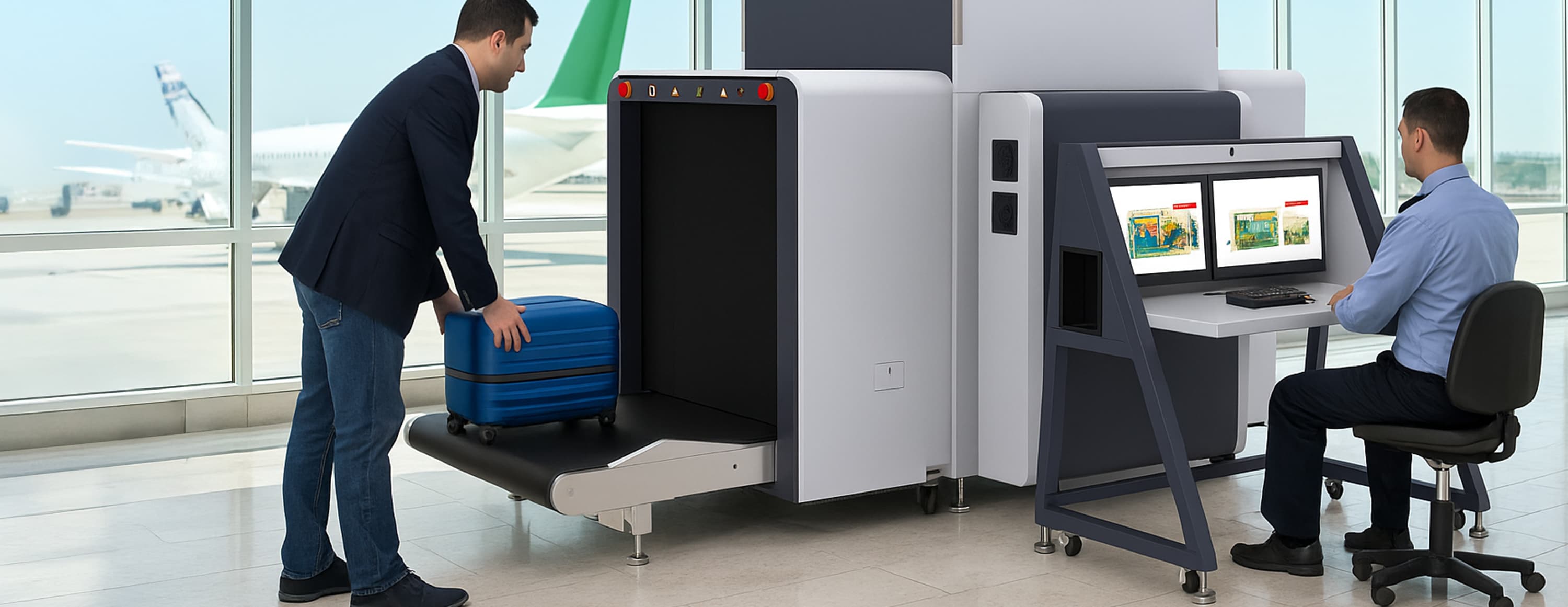
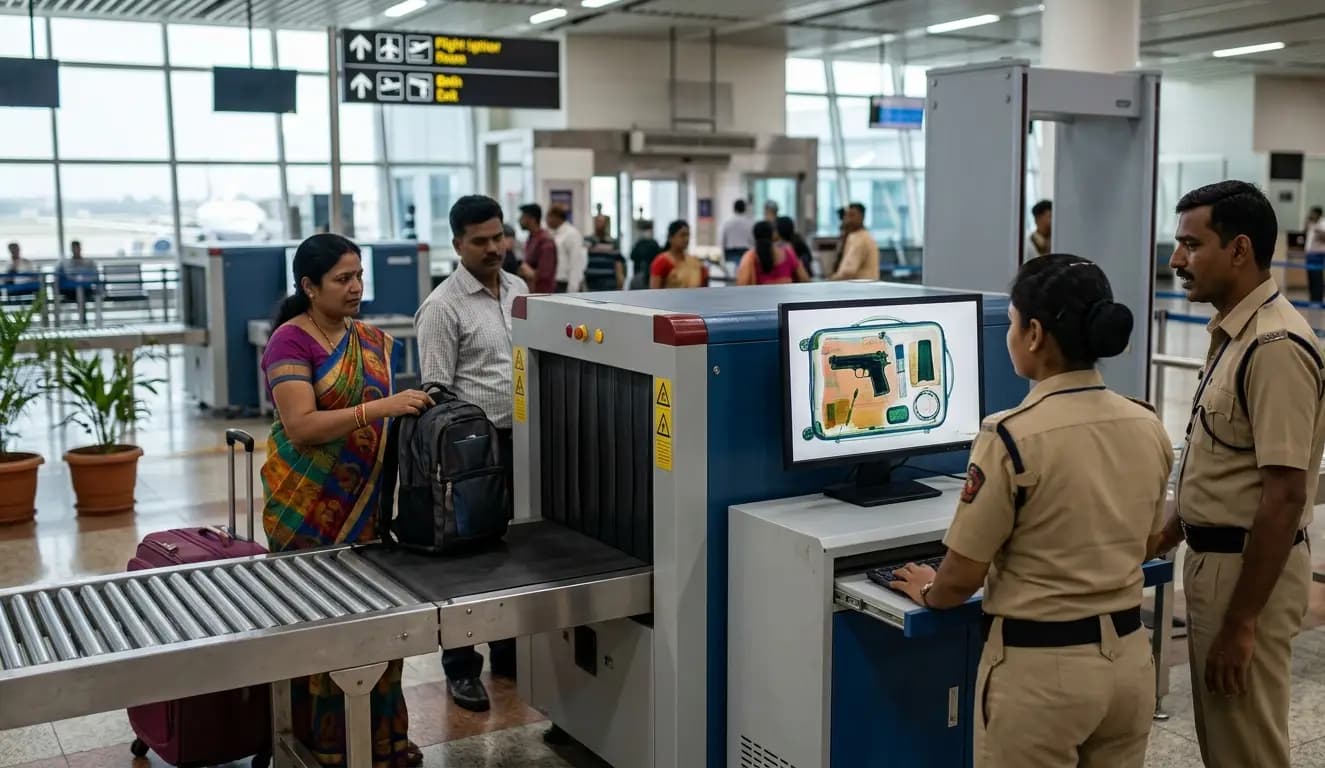
An X-ray baggage scanner is a security machine that passes bags through a low-dose X-ray tunnel and produces a colour-coded image of the contents. Organic, inorganic and metal materials appear in different colours, helping operators quickly spot threats. It is a core part of entrance security wherever there is public footfall or valuable assets.
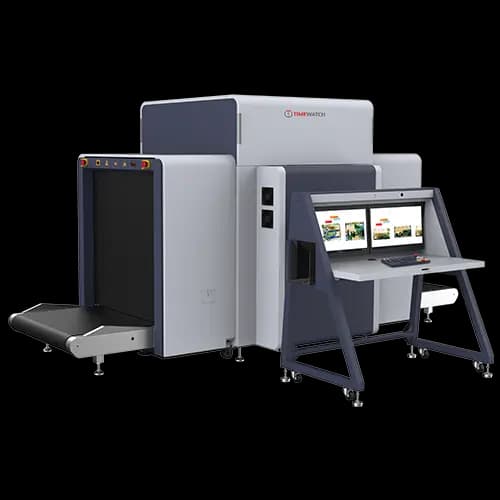
AI TimeScan Dual View
Dual-view X-ray baggage scanner
How Does a X-Ray Baggage Scanner Work?
- 1
A bag is placed on the conveyor and enters the shielded X-ray tunnel.
- 2
A low-dose X-ray beam passes through; detectors measure how materials absorb it.
- 3
The software builds a colour-coded image separating organic, metal and dense items.
- 4
AI threat detection highlights suspicious shapes such as weapons and wires.
- 5
The operator inspects flagged items; adjustable alarms reduce false alerts from everyday objects.
Types of X-Ray Baggage Scanner in India
Scanners are chosen by tunnel size and imaging. Dual-view models reveal items a single view can hide; larger tunnels handle cargo.
| Type | Best for | Imaging / tunnel |
|---|---|---|
| Single-view (compact tunnel) | Offices, small venues, mail rooms | One angle, small bags |
| Dual-view (standard tunnel) | Malls, hotels, airports, events, metro | Two angles, standard baggage |
| Large tunnel / cargo | Logistics, cargo, industrial screening | Large items and pallets |
What Determines the Cost
The price of a x-ray baggage scanner in India depends on several factors. TimeWatch gives a customised quote based on your requirement and site conditions:
- Tunnel size (compact, standard or large / cargo)
- Single-view or dual-view imaging
- AI threat-detection and software features
- Throughput and generator rating
- Installation, operator training and maintenance
Key Features

- Dual-view imaging - two angles at once reveal concealed items
- AI threat detection for weapons, explosives and contraband
- High-speed conveyor to keep queues moving
- Colour-coded material discrimination (organic / inorganic / metal)
- Zoom, contrast and density image tools; adjustable alarms
- Self-diagnostics, maintenance alerts and network integration for 24/7 use
Where X-Ray Baggage Scanners Are Used
Airports and seaports, railway and metro stations, malls and retail, hotels and convention centres, stadiums and events, government and defence buildings, courts, embassies, corporate offices, IT parks and logistics facilities across India.



TimeWatch: X-Ray Baggage Scanner Manufacturer & Provider Across India
TimeWatch is an X-ray baggage scanner manufacturer and supplier in India, offering AI dual-view scanners with sales, installation and service, and models from compact single-view units to large cargo systems.
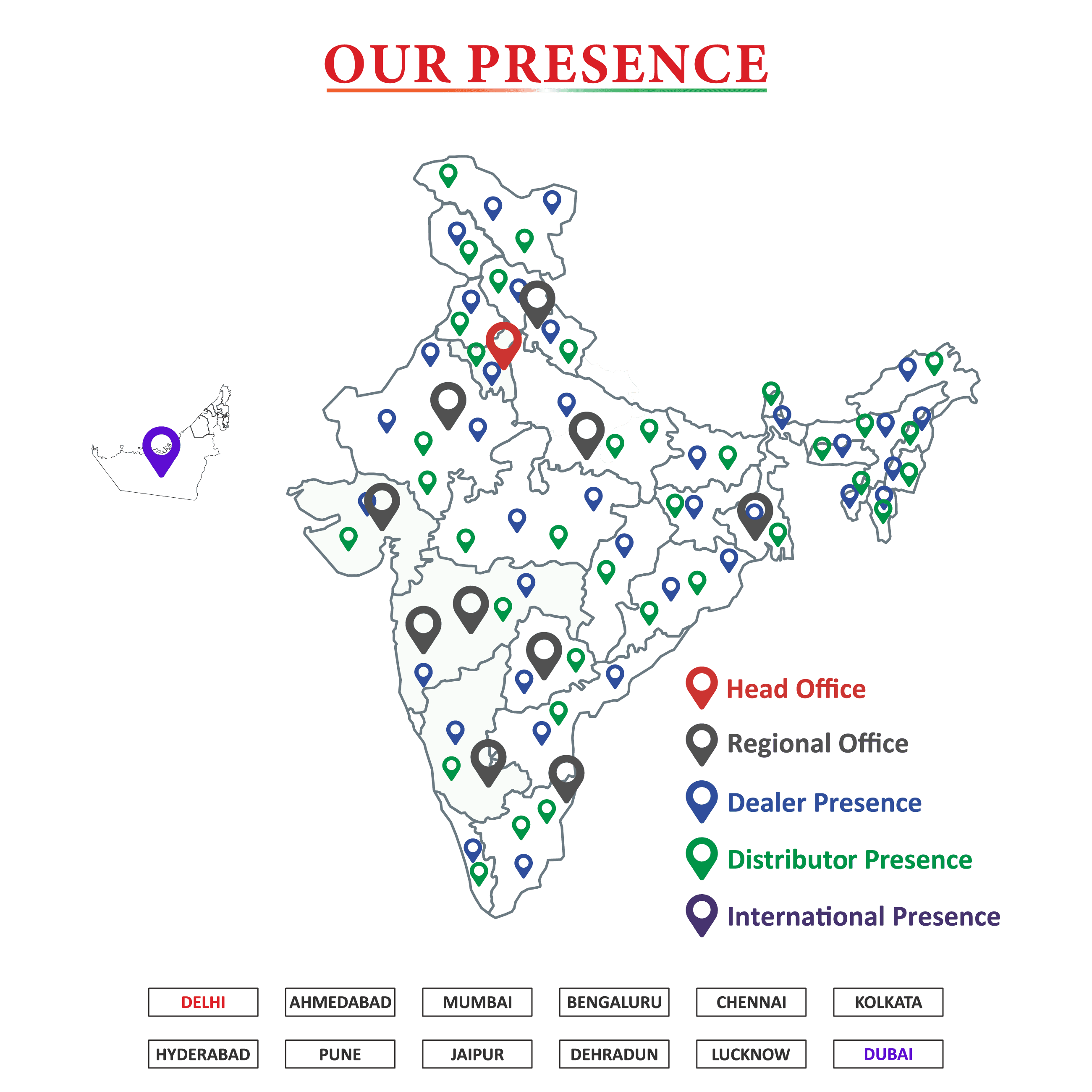
TimeWatch supplies, installs and services across India, including Maharashtra (Mumbai, Pune, Nagpur), Delhi NCR (Delhi, Noida, Gurugram, Faridabad), Karnataka (Bengaluru, Mysuru), Tamil Nadu (Chennai, Coimbatore), Telangana (Hyderabad), Gujarat (Ahmedabad, Surat, Vadodara), Uttar Pradesh (Lucknow, Kanpur), West Bengal (Kolkata), Rajasthan (Jaipur), Haryana, Punjab (Chandigarh), Kerala (Kochi) and Madhya Pradesh (Indore), with pan-India delivery and technical support.
Our Inspection & Control Products

TW100100(AI)
Introducing the TW100100(AI) X-ray security inspection system, a cutting-edge solution designed to elevate security standards across diverse environments. This next-generation system seamlessly integrates intelligent detection, multi-functional capabilities, and a high-resolution display, making it ideal for transportation hubs, office buildings, large events, courts, prisons, hospitals, and various public places. Engineered with a generously sized tunnel, it ensures thorough and efficient screening of large suitcases, parcels, and extra-large backpacks. Powered by advanced material discrimination technology, it accurately classifies objects by color (3 or 6 options) and intelligently recognizes over 35 major target types, triggering automatic alarms. Experience crystal-clear, high-definition X-ray images, dynamic conveyor speed adjustment for different scenarios, and robust remote management features for real-time monitoring and data access, guaranteeing unparalleled security and operational flexibility.
Read More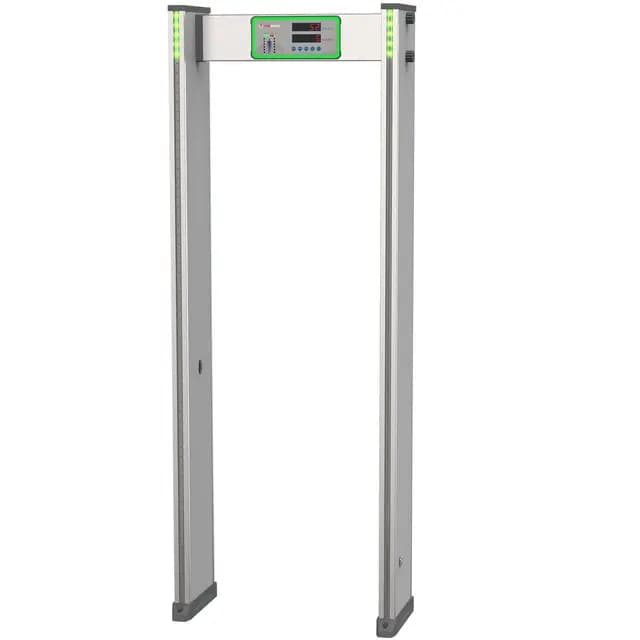
TWD-2109 (9 Zone)
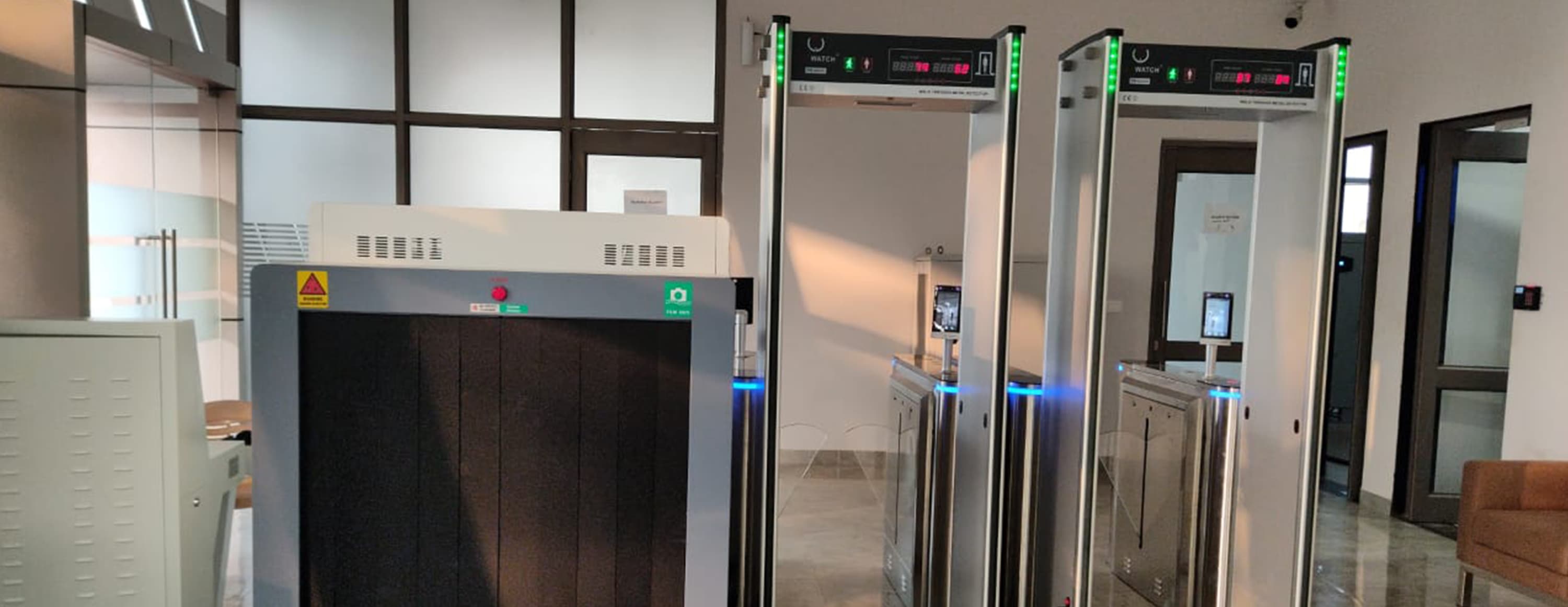
The TWD-2109 Door Frame Metal Detector is engineered for unparalleled security screening, ensuring peace of mind in any setting. Utilizing advanced electromagnetic induction technology, it precisely detects all magnetic metals, from concealed weapons like guns and knives to everyday items such as phones and keys. Instant audio and visual alarms alert personnel to potential threats, making your premises safer and more secure. Built with an upgraded aluminum alloy structure, an integrated circuit board design, and a high-performance copper wire coil system, the TWD-2109 offers exceptional stability, durability, and long-term reliability. Its ultra-high sensitivity can even pinpoint objects as small as a coin, while anti-interference performance minimizes false positives. Moreover, its 100% human-safe design guarantees zero radiation risk, making it safe for everyone, including pregnant women and pacemaker users. Experience efficient, reliable, and human-safe security with the TWD-2109.
Read More
TW-HH100
The TimeWatch TW-HH100 is a lightweight, ultra-sensitive hand-held metal detector ideal for rapid security screening at checkpoints, events, and public venues. Featuring fast detection, pinpoint LED status indicators, and clear audio/vibration alarms, the TW-HH100 quickly locates concealed weapons and metallic objects with minimal effort. Its ergonomic grip ensures all-day comfort for security personnel, while user-adjustable sensitivity accommodates different search requirements. TW-HH100 operates on a rechargeable battery for up to 40 hours of use, with a robust shockproof and tamper-resistant design for dependable operation in both indoor and outdoor environments. This detector is a reliable tool for law enforcement, schools, airports, and corporate security teams seeking efficient, accurate secondary screening.
Read More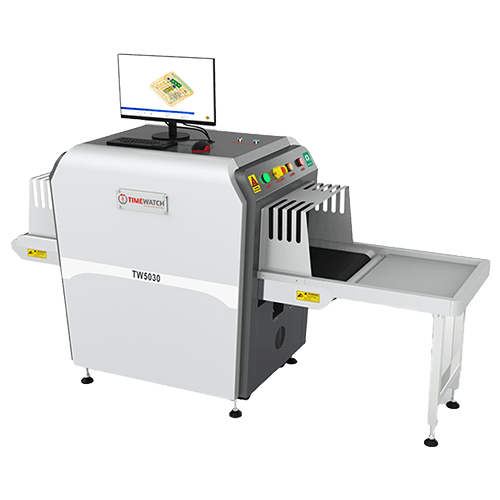
TW5030
TimeWatch TW5030 – Compact X-Ray Baggage Scanner The TimeWatch TW5030 is a space-saving X-ray scanner engineered for efficient security screening of small bags, parcels, and briefcases. With a tunnel size of 500 x 300 mm, it is ideal for hotels, offices, schools, courts, and areas with limited entryway space. TW5030 delivers crisp, high-resolution images and color-coded threat indicators for reliable detection of firearms, explosives, and contraband. Fast conveyor speed and intuitive touchscreen controls optimize throughput in busy locations, while automated diagnostics and predictive maintenance keep the system running smoothly.
Read MoreGet an X-ray baggage scanner quote
Compact, dual-view and cargo tunnels — supplied, installed and serviced pan-India.
Frequently Asked Questions
What is an X-ray baggage scanner used for?
It screens bags and parcels for weapons, explosives, narcotics and other prohibited items without opening them, at airports, malls, hotels, offices and events.
How does an X-ray baggage scanner work?
A bag passes through a low-dose X-ray tunnel; detectors build a colour-coded image of the contents, and AI highlights suspicious items for the operator to inspect.
What is the price of an X-ray baggage scanner in India?
The price of an X-ray baggage scanner in India depends on tunnel size, single or dual-view imaging, AI features and installation. TimeWatch provides a customised quote based on your site and throughput - contact us for pricing.
What is the difference between single-view and dual-view scanners?
A single-view scanner images a bag from one angle, while a dual-view scanner images from two angles at once, revealing concealed items a single view can hide, with fewer re-scans.
Is X-ray baggage screening safe for items and people?
Yes. Scanners use a low, shielded X-ray dose that is safe for baggage, including most film and electronics, and operators are protected by lead-lined tunnels and curtains.
Which industries need an X-ray baggage scanner?
Airports, seaports, railway and metro stations, malls, hotels, stadiums, government buildings, corporate offices, courts, embassies and logistics facilities.
What tunnel size of X-ray scanner do I need?
Compact tunnels suit offices and small venues, standard dual-view tunnels suit malls, hotels and airports, and large tunnels suit cargo. TimeWatch can advise based on your bag sizes and throughput.
Who is a reliable X-ray baggage scanner manufacturer in India?
TimeWatch is a reliable X-ray baggage scanner manufacturer and supplier in India, offering AI dual-view scanners with installation, training and nationwide support across all major states.