Real Time Attendance Monitoring and Privacy | TimeWatch
Real time attendance monitoring gives live head counts and instant alerts. Here is how to use it well while respecting employee privacy under the DPDP Act.
Real time attendance monitoring means every punch reaches a central dashboard within moments, so managers can see who is present, who is late and which shift is short staffed right now rather than at month end. Used with clear limits, it helps operations run smoothly without turning the workplace into a surveillance zone.
The privacy question is fair, and employees raise it more often now. A good system answers two questions with equal care: what useful information does management need, and what should it deliberately not collect? This article covers both sides.
What does real time attendance monitoring actually show?
At its core, a real time system syncs punches from devices and mobile apps to one dashboard. Depending on your setup, that dashboard can show:
- Live head count by branch, department or shift, updated as people punch in.
- Late arrivals and absentees for the current shift, before the shift is half over.
- Missed out punches and people still on premises after shift end.
- Field staff check ins with location and time, for teams who work outside the office.
- Pending requests such as leave, out duty or missed punch corrections awaiting approval.
The point is speed. Information that once arrived in a register at day end is available while you can still act on it.
What are the practical benefits for Indian businesses?
Better shift planning. A plant manager who sees at 6:20 am that the morning line is six workers short can call in standby labour or adjust the line before production suffers.
Safety and emergencies. In a fire drill or an evacuation, a live head count tells you who is inside the building. This matters in factories, hospitals and large offices.
Multi location control. A business with branches in Delhi NCR, Pune and Hyderabad can see all of them on one screen instead of waiting for each branch to email a report.
Faster approvals. Managers get email or app notifications for leave and out duty requests and can approve on the go, so attendance records are complete before payroll.
Contractor accountability. When contract labour arrives through an agency, live counts let you check deployment against the agreed number every day.
Where does privacy come into the picture?
Biometric data such as face and fingerprint templates is personal data under the Digital Personal Data Protection Act 2023. Location captured by a mobile app is personal data too. The Act sets out general principles that apply directly to attendance systems:
| Principle | What it means for attendance |
|---|---|
| Consent and notice | Tell employees clearly what is collected and why, and take consent where required |
| Purpose limitation | Use attendance data for attendance, payroll and safety, not unrelated profiling |
| Data minimisation | Collect only what the stated purpose needs |
| Security safeguards | Protect stored data with access control, encryption and limited admin rights |
| Retention | Keep data only as long as needed for the purpose and legal record keeping |
These are general principles. The specific obligations for your organisation depend on your setup, so confirm details with your legal or compliance advisor before rollout.
What should employers not track?
This is where the balance is really struck. A sensible policy draws firm lines:
- No location tracking outside working hours. Geo fencing and check in location should apply during duty, not evenings, weekends or leave days.
- No continuous GPS for office staff. Route tracking makes sense for field sales or service teams on duty, not for someone at a desk.
- No use of attendance data for unrelated decisions. Biometric templates should not be repurposed for anything beyond identity verification.
- No open access to raw data. Line managers need their team’s attendance, not everyone’s biometric records or full location history.
- No hidden monitoring. If CCTV based attendance is used, staff should know where cameras are and what they record.
When employees know these lines exist, adoption improves. People are far more comfortable with a system that is open about its limits.
How do you introduce real time monitoring without backlash?
Start with communication, not hardware. Share a short written policy that explains what the dashboard shows, who can see it, how long data is kept and how employees can raise concerns or correct errors. Let staff see their own attendance in the mobile app so the system feels two sided rather than one way.
Then configure access carefully. HR may need full reports, a branch head needs branch data, and a supervisor needs only the team on shift. Review admin access every few months, especially after role changes. Finally, make the correction process easy. A missed punch should be fixed through a simple request, not a confrontation.
How TimeWatch can help
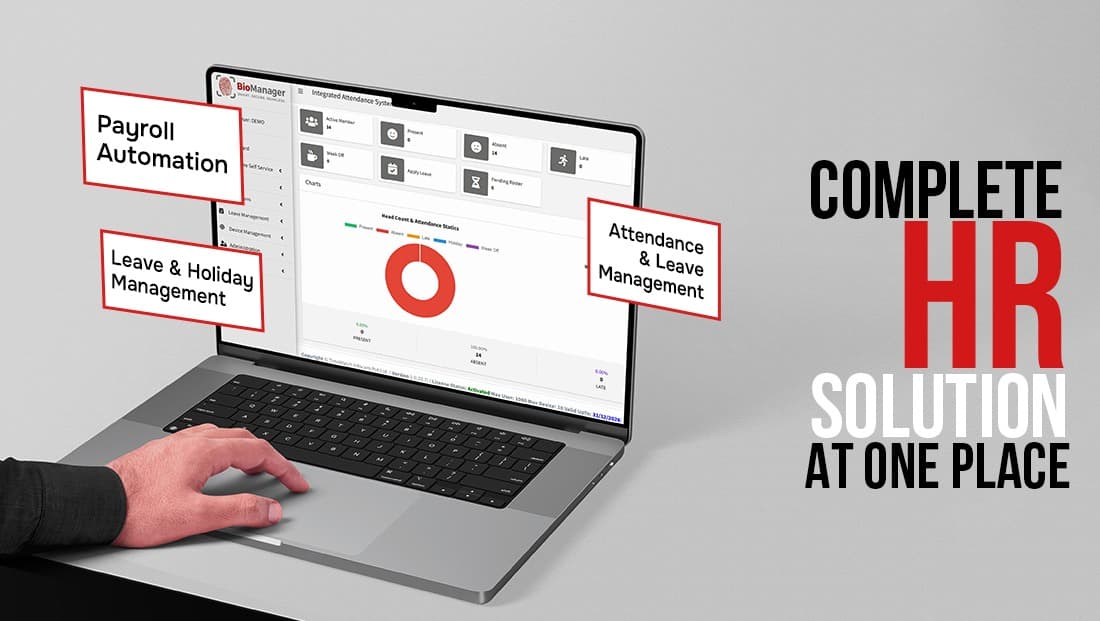
TimeWatch BioManager is built for real time visibility with sensible controls. Devices sync in real time to a web dashboard with cloud access, and the platform provides daily head count and MIS reports, email and app notifications, and multi level leave approval. For field teams, the TimeWatch Mobile Application offers live face verification and geo fencing mobile punch, recording check in location and time only when staff mark attendance.
You can explore the full attendance and payroll software or read about how CCTV based smart attendance works if you are considering camera based options. Our team can also help you plan who in your organisation should see which reports.
Frequently asked questions
Is real time attendance monitoring legal in India?
Attendance monitoring for legitimate purposes such as attendance, payroll and safety is common practice. Because biometric and location data is personal data under the DPDP Act 2023, follow consent, purpose and security principles and confirm specifics with your legal or compliance advisor.
Do employees have to be told about geo fencing?
Yes, transparency is essential. Staff should know when location is captured, for what purpose, and that it is limited to duty hours.
Can a supervisor see biometric data of employees?
They should not need to. Supervisors need attendance records, not biometric templates, so restrict access using role based permissions.
Does real time monitoring need constant internet?
Devices can store punches locally and sync when the connection returns, so a short outage does not lose data. The live dashboard updates once connectivity is restored.
How long should attendance data be stored?
Keep it as long as needed for payroll, statutory record keeping and audits, then archive or delete as per your policy. Your compliance advisor can confirm suitable periods.
Next step
A live dashboard is most valuable when your team trusts it. Speak with TimeWatch to see BioManager’s real time view and discuss an access and privacy setup that suits your organisation.