How User Friendly Should Attendance Software Be?
A practical guide for HR and admin teams on what a user friendly attendance system looks like, from setup and reports to dashboards and training time.
A user friendly attendance system should let your HR or admin person set up shifts, pull a monthly report and fix a missed punch without calling the vendor every week. If a routine task needs a manual, a support ticket or an IT person, the system is not easy enough, no matter how good the hardware is.
Most conversations about attendance focus on the employee side, such as how fast the face scan is. But the people who live with the system every day are the HR, admin and payroll teams. This article looks at ease of use from their side of the desk.
Who actually uses an attendance system every day?
Employees touch the device for two seconds at the start and end of a shift. Your back office team spends hours inside the software each month. In a typical Indian SME, that means:
- The HR executive who creates employee records, assigns shifts and approves leave
- The admin or facility manager who looks after the devices at the gate or each floor
- The accounts or payroll person who exports attendance for salary processing
- Branch or site managers who check daily head count and late arrivals
- The owner or director who wants a quick summary without opening ten screens
If the system confuses any one of them, the company slowly drifts back to registers and spreadsheets.
What should setup look like on day one?
Setup is where many teams first lose patience. A user friendly attendance system should let you add employees in bulk, import departments and designations, and define common Indian shift patterns such as general shift, rotating morning and night shifts, split shifts for retail, and weekly offs that differ by department.
Enrolment is the other half of setup. Good software lets HR enrol at the device or from a mobile app and push the data to every terminal, so a new joiner at a branch does not travel to head office. During a demo, ask the vendor to set up two or three of your real shift rules. If it takes an hour of workarounds in front of you, it will take longer when you are alone.
If you want to understand what happens between a punch and a report, our explainer on how an attendance machine works walks through the flow.
How easy should reports and dashboards be?
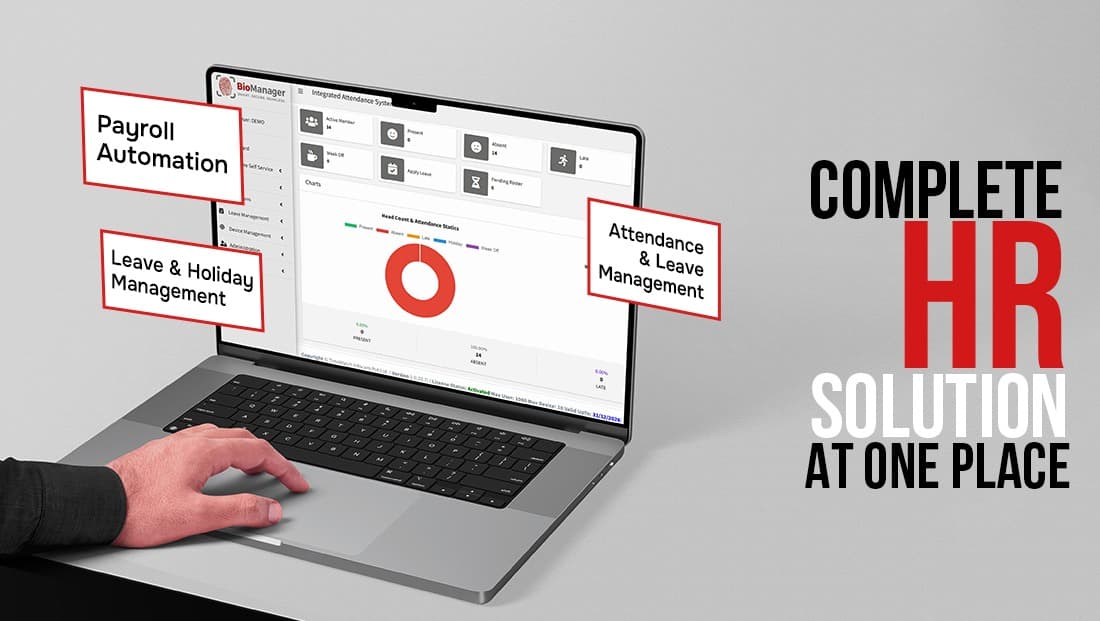
Reports are the reason the system exists. HR should be able to open a monthly attendance summary, a late coming report or a department wise absentee list in a couple of clicks, filtered by date, branch and shift. A daily dashboard should show who is in, who is absent and who is on leave or out duty, without anyone having to refresh a device or wait for a data download.
Here is a simple way to judge ease of use during a trial:
| Task | Easy enough | Warning sign |
|---|---|---|
| Monthly attendance report | Two or three clicks, ready to export | Needs manual cleanup in a spreadsheet |
| Correcting a missed punch | Approved in the software with a reason and audit trail | Edited outside the system or by the vendor |
| Daily head count | Visible on a dashboard or app | Someone calls each branch |
| Payroll handover | Attendance flows into salary calculation | Data is retyped by accounts |
| New shift rule | Created by HR in minutes | Needs a support call |
What about managing devices across branches?
For a retail chain, a school group or a manufacturer with three plants, device management is a daily concern. Admin teams need to see which devices are online, push employee data to the right locations and remove staff who have left without visiting each site.
Real time sync removes most of this effort. When a branch device loses its network during monsoon power cuts, it should store punches locally and upload them once it reconnects. Look for a single screen showing device status across all locations. Our biometric attendance machines hub explains the connectivity options, from USB only models for one room offices to networked terminals for multi location setups.
How much training time is reasonable?
A practical benchmark: a computer literate HR executive should be comfortable with daily tasks after a short guided session and a few days of use. Payroll configuration and complex shift rules may need a longer session with the implementation team, which is normal. What is not normal is needing a refresher every time a new HR person joins.
Ways to keep training time low:
- Choose software with clear menus in plain English and sensible defaults
- Ask for a recorded walkthrough or written guide for your own setup, not a generic one
- Make sure leave and out duty requests can be raised by employees from a mobile app, so HR is approving rather than entering
- Confirm there is a helpdesk you can call when something unusual comes up
Indian law requires employers to maintain attendance and wage records, for example under the Factories Act 1948 and state Shops and Establishments Acts, and a system HR can operate confidently produces cleaner records. Confirm your obligations with your legal or compliance advisor.
How TimeWatch can help
TimeWatch built BioManager, its attendance, access and payroll platform, with the back office user in mind. It offers a web dashboard with cloud access, real time sync across devices, mobile app enrolment, leave and out duty requests with multi level approval, email and app notifications, and daily head count and MIS reports. Attendance flows directly into the TimeWatch Payroll Management module, which handles overtime, leave and holiday integration and sends salary slips by PDF and email. Learn more about our cloud attendance and payroll software.
For an on premise setup, iAS Desktop offers shift rosters, leave and device management and reports on a local computer. A small office can start with the Bio-20, while multi branch businesses usually choose networked models such as the Bio-4W or TrueFace3000. Our implementation and helpdesk teams handle setup and training.
Frequently asked questions
What makes attendance software user friendly for HR?
Clear menus, quick reports, simple shift setup and easy correction of missed punches with an audit trail. If HR can handle daily work without calling the vendor, the software is doing its job.
How long does it take to train HR on new attendance software?
Daily tasks are usually learned quickly with a guided session and some hands on use. Payroll and complex shift rules may need a longer session with the implementation team.
Can managers see attendance on their phones?
With a system that has a mobile app, yes. Managers can check daily head count, approve leave and view their team’s attendance without logging into a computer.
Is cloud software easier to use than desktop software?
Cloud software is easier for multi location teams because everyone sees the same live data. Desktop software suits single site businesses that prefer to keep data on their own computer.
Next step
The best way to judge ease of use is to try it with your own shifts and reports. Talk to TimeWatch to book a demo where our team sets up your real rules and shows your HR team the screens they will use every day.