How a Fingerprint Attendance Machine Works | TimeWatch
Learn how a fingerprint attendance machine enrols users, stores a template instead of an image, matches punches, syncs data and handles worn fingers.
A fingerprint attendance machine scans the ridges of your finger, converts them into a mathematical template of unique points, and compares that template with the ones stored during enrolment. If they match, it records your ID with the date and time and later sends that log to attendance software.
That is the short version. The longer version is worth understanding, because it explains why some punches fail, why the machine does not keep a photo of your finger, and what happens to your data afterwards. Here is the full journey of a single punch.
What happens during enrolment?
Enrolment is the one time setup for each employee. An administrator creates a user ID on the device or in the software, and the employee places the same finger on the sensor two or three times. The machine takes several readings so it can build a reliable reference even if the finger is placed slightly differently later.
Good practice is to enrol two fingers per person, usually the index fingers of both hands. If one finger gets cut or bandaged, the employee can still punch with the other. Enrolment should be done calmly, with clean, dry fingers pressed flat, because a poor enrolment causes rejections for months.
Does the machine store a picture of my fingerprint?
No. This is the most common misunderstanding. The sensor captures an image for a fraction of a second, but the device immediately extracts specific features called minutiae. These are points where ridges end, split or curve. The machine records their positions and angles as a string of numbers, called a template, and discards the image.
| What people assume | What actually happens |
|---|---|
| A photo of the fingerprint is saved | Only a numeric template of minutiae points is saved |
| The fingerprint can be printed back out | A template cannot practically be turned back into a usable fingerprint image |
| Every punch saves a new fingerprint | A punch saves only the user ID, date, time and verification mode |
The template is still biometric data, and under India’s Digital Personal Data Protection Act 2023 it is treated as personal data. Employers should take consent, use it only for attendance and access, and keep the device and software secure. Your legal or compliance advisor can confirm the specifics for your organisation.
How does matching work when you punch?
When an employee places a finger on the sensor, the machine repeats the same process: capture, extract features, build a template. It then compares the new template with the stored ones.
There are two ways this comparison happens:
- 1:1 verification. The employee first enters a PIN or shows a card, and the machine compares the finger only with that person’s template. This is very fast and accurate.
- 1:N identification. The employee simply places the finger, and the machine searches all stored templates for the best match. This is more convenient and is how most offices use it.
The match is not an exact copy comparison. Every placement differs slightly in pressure and angle, so the machine calculates a similarity score. If the score crosses a set threshold, the punch is accepted. A threshold set too low risks accepting the wrong person, and one set too high causes genuine users to be rejected, which is why manufacturers tune it carefully.
Where does the attendance data go after a punch?
Each accepted punch creates a small log record with the user ID, date, time and sometimes the device number and punch type. A fingerprint attendance machine stores thousands of these logs in its memory, so nothing is lost if the network drops or there is a power cut.
Getting the logs into software happens in one of three ways:
- USB download. Someone copies the logs to a pen drive and imports them. Simple, but manual.
- LAN or WiFi. The device connects to your network and sends logs to on premise or cloud software automatically.
- 4G. Some terminals use a SIM card to send data from sites without wired internet.
The software then applies your rules. It works out first in and last out, compares them with the shift, and marks the employee present, late, half day or absent. You can read more on how an attendance machine works from start to finish.
Why does a fingerprint machine sometimes fail to read?
Fingerprint machines are reliable for most people, but some conditions make reading harder:
- Worn fingers. Masons, loaders, assembly line workers and people who handle cement, chemicals or abrasive material often have faint ridges.
- Wet, oily or very dry skin. Sweat in humid weather, oil in kitchens and workshops, or cracked skin in winter can all affect the scan.
- Dirty sensors. Dust on the glass reduces image quality. A quick wipe with a soft, dry cloth helps.
- Cuts and bandages. This is why enrolling a second finger matters.
- Elderly employees. Ridges become less pronounced with age.
If a large share of your workforce does manual work, consider a terminal that also supports face or palm, or a card as backup. Many problems blamed on the machine are actually enrolment or placement problems, and a short training session for staff fixes a lot of them.
How TimeWatch can help
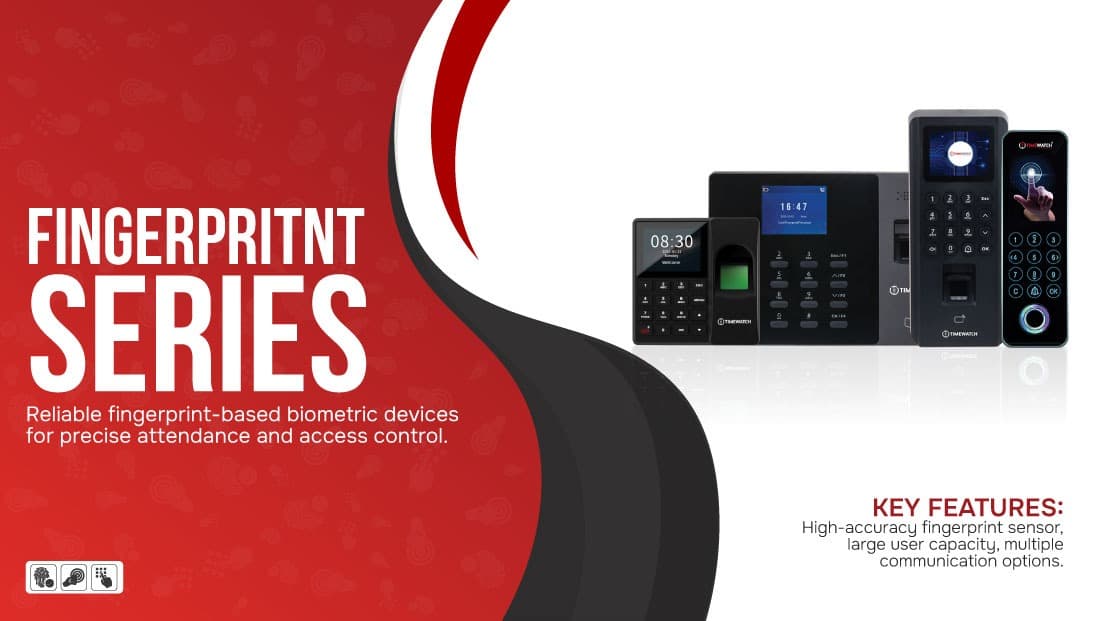
TimeWatch builds its own range of biometric attendance machines, so you can choose the right sensor for your environment. The Bio-20 and Bio-27 are dependable fingerprint terminals for offices, and the Bio-4W adds WiFi and capacity for 10,000 users. For workplaces where fingers are often worn, the Bio-1SE combines face, palm and fingerprint with a built in battery, so every employee has a method that works.
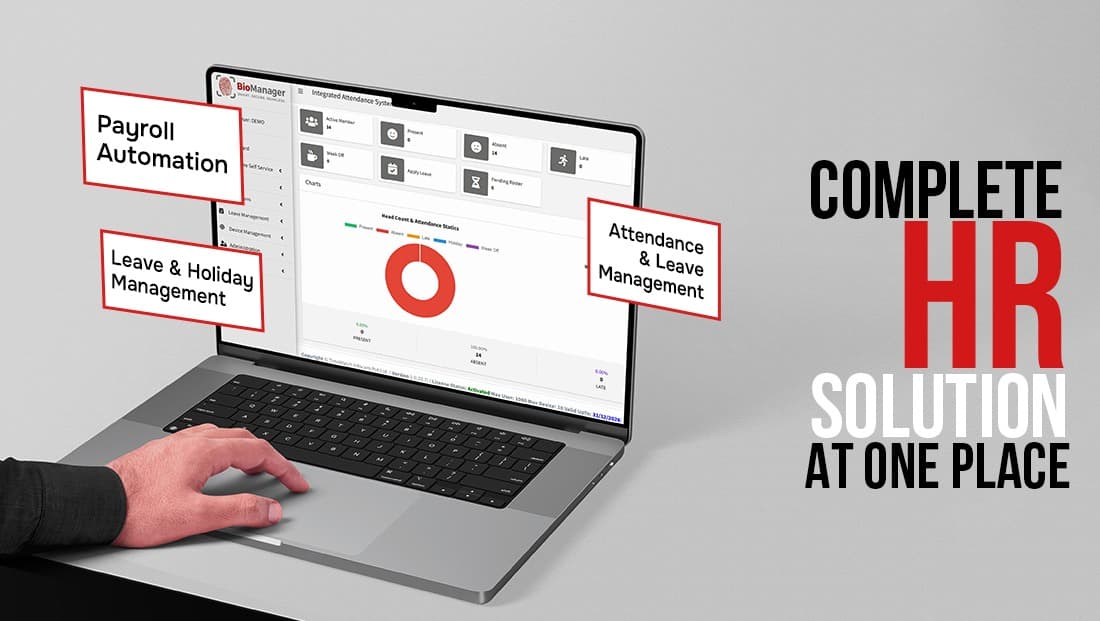
Logs from any of these devices flow into BioManager or iAS Desktop, where shift rules, leave and reports are applied automatically.
Frequently asked questions
Can someone copy my fingerprint from the attendance machine?
The machine stores a numeric template, not an image, which makes recreating a usable fingerprint impractical. Employers should still protect access to the device and software.
How many fingers should each employee enrol?
Two is good practice, usually one from each hand. It gives a backup if one finger is injured.
Why does the machine accept me only on the second try?
Placement changes pressure and angle. Pressing the finger flat in the centre of the sensor, the way it was enrolled, gives the best result on the first attempt.
Does a fingerprint machine work without internet?
Yes. It stores logs in its memory and sends them to software when connected, or you can download them by USB.
What is the alternative for workers with worn fingerprints?
Face recognition, palm recognition or a card with PIN. Multi method terminals let you choose the right option for each employee.
Next step
If fingerprint rejections are slowing down your gate, or you are planning a new installation, TimeWatch can help you choose the right sensor. Reach out to us for a site assessment and demo.