Tablet and Phone Clocking vs Wall Terminals | TimeWatch
Compare shared tablets, personal phones and wall mounted biometric terminals for attendance on reliability, spoofing risk and total cost of ownership.
For a fixed site where most people arrive at the same gate, a wall mounted biometric terminal is usually more reliable and harder to cheat than a shared tablet. Personal phones are the better choice when staff work away from one location, while shared tablets fit a narrow middle ground of small, supervised, low traffic counters.
The comparison of tablet attendance vs biometric terminal often starts with a simple thought: “We already have a spare tablet, why buy a device?” It is a fair question. The honest answer depends on how many people punch, where they punch, how much you worry about proxy attendance and what the setup will cost you over three to five years, not just in the first month.
What are the three options, exactly?
It helps to define them clearly, because they behave very differently:
- Shared tablet kiosk: a general purpose tablet mounted at the entrance running an attendance app, often with face capture through the front camera.
- Personal phone clocking: each employee punches on their own smartphone using an app, usually with selfie verification and geo fencing.
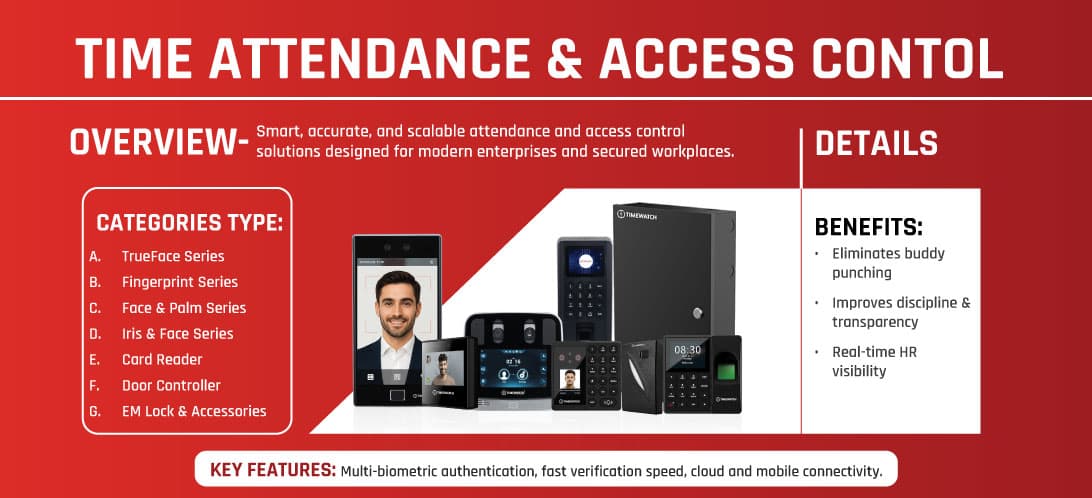
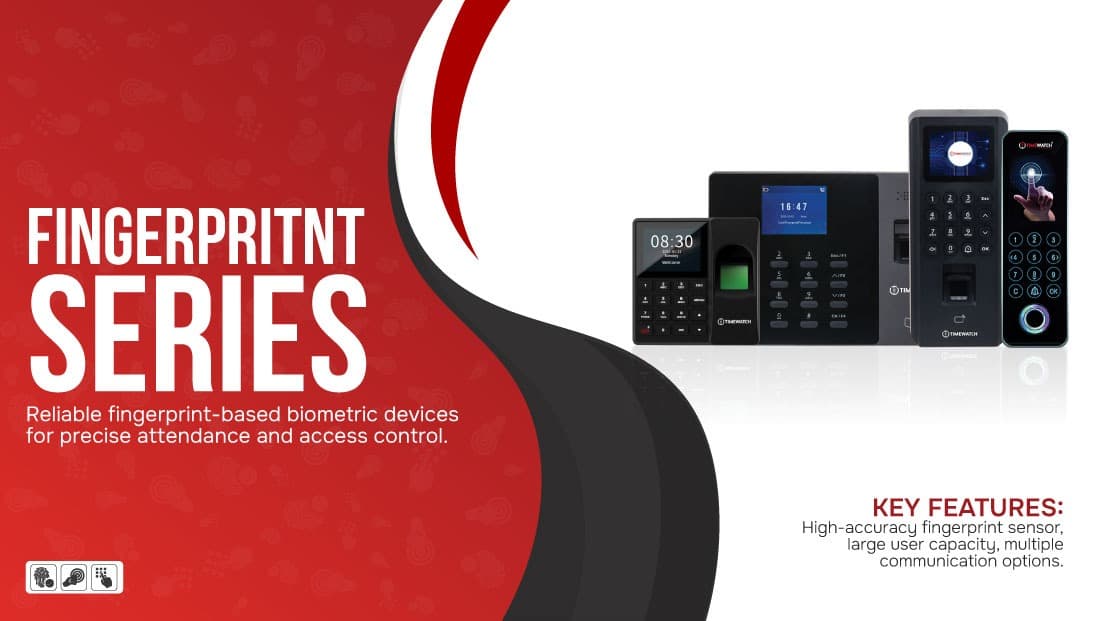
- Wall mounted biometric terminal: a purpose built device with a dedicated camera, fingerprint sensor or both, designed to run attendance all day, every day.
Each can feed the same attendance software, so the choice is really about the front end where the punch happens.
Which option is most reliable day to day?
Reliability is where purpose built hardware pulls ahead. A wall terminal is designed to run continuously, boot straight into attendance and keep storing punches when the network drops. Many models have a built in battery or can run on a small UPS through power cuts, which matters during the monsoon.
A shared tablet is a consumer device doing an industrial job. It may update its operating system at the wrong time, run out of storage, overheat in a hot lobby or get unplugged by someone charging a phone. Its camera is built for video calls rather than recognition in mixed lighting. None of these are certain to happen, but over a year at a busy gate, some of them usually do.
Personal phones are reliable in a different way: the employee keeps them charged and connected. The weak points are old handsets, poor GPS indoors and patchy mobile data at remote sites.
How does spoofing risk compare?
Spoofing means someone punching for another person or faking their presence. Here is how the options typically compare:
| Risk | Shared tablet | Personal phone | Wall mounted terminal |
|---|---|---|---|
| Buddy punching | Possible if face check is weak | Possible if phones are shared | Low with face or fingerprint |
| Photo or screen spoofing | Depends on app quality | Depends on app quality | Purpose built devices include live face checks |
| Location faking | Not applicable, device is fixed | Possible with location spoofing apps, reduced by geo fencing and face verification | Not applicable, device is fixed |
| Tampering with the device | Easy to unplug or remove | Not applicable | Anti tamper designs and secure mounting available |
| Data editing on the device | Depends on app security | Depends on app security | Locked firmware, admin controls |
For a factory gate or hospital entrance with hundreds of punches per shift, the terminal offers the strongest protection. For field staff, the phone remains the only practical option, and pairing live face verification with geo fencing closes most gaps. Our geo fencing mobile punch page explains how that works.
What does each option really cost over time?
The upfront price of a tablet can look attractive, but total cost of ownership tells a fuller story. Consider:
- Hardware life: consumer tablets are typically replaced more often than industrial terminals
- Mounting and security: tablets need a lockable stand or enclosure, plus a charging solution
- App licences: tablet and phone apps often carry per user or per device subscriptions
- Downtime cost: each day a device is down means manual registers and corrections
- Support: a terminal comes with vendor support for the whole unit, while a tablet setup splits responsibility between hardware and software
- Phones: personal phone clocking has low hardware cost to the company but depends on employees having suitable devices
A fair comparison adds these over three to five years rather than comparing the first invoice.
So which option suits your site?
Use this quick guide:
- Factory, warehouse, school, hospital or large office: wall mounted terminal at each entry point
- Small office or clinic with a receptionist present: a compact terminal is still simplest, though a supervised tablet can work
- Sales, service and delivery teams: personal phone app with face verification and geo fencing
- Construction or multiple temporary sites: rugged handheld devices or phone apps, since fixed power and LAN may not exist
- Mixed workforce: terminals at fixed sites plus a mobile app for field staff, all in one dashboard
Whichever you choose, remember that biometric data is personal data under the Digital Personal Data Protection Act 2023, so consent, purpose limitation and security matter. Confirm specifics with your legal or compliance advisor.
How TimeWatch can help
TimeWatch makes purpose built face attendance machines for every type of site. The TrueFace1000E and TrueFace1000D are compact terminals for small offices, verifying in about 0.2 seconds. The AIFace-T5 adds battery backup of up to 4 hours for sites with frequent power cuts, and the TrueFaceT50-IND brings a powder coated metal body with anti tamper locking for factory gates and outdoor use.
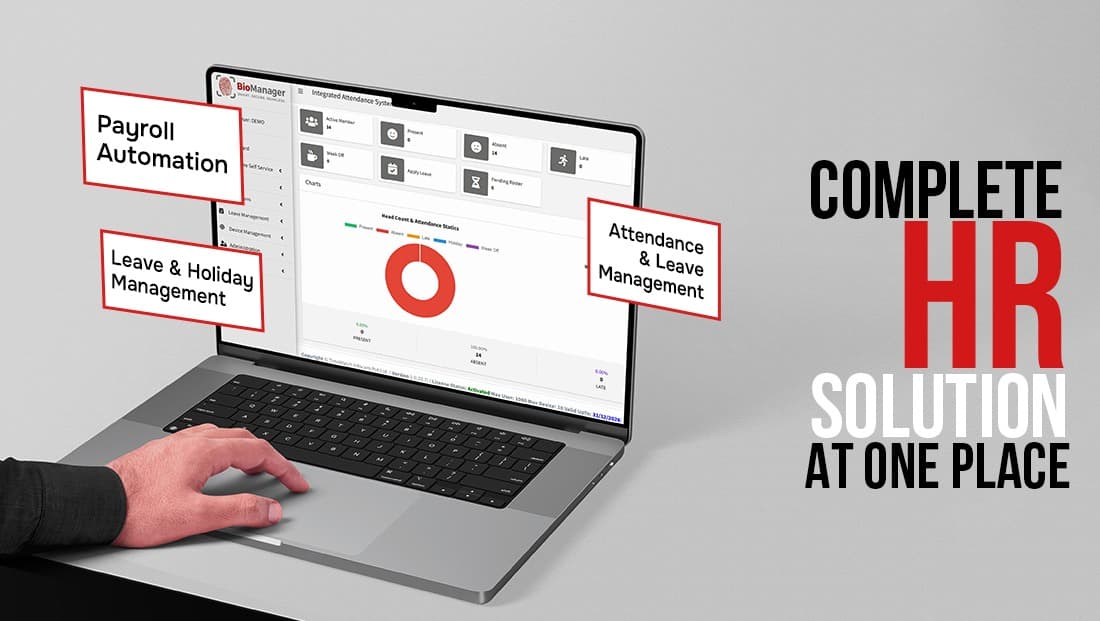
For staff on the move, the TimeWatch Mobile Application offers live face verification and geo fencing, and the AI-FACE-T7HD is a rugged handheld face device with IP68 protection for sites without fixed infrastructure. Everything syncs to BioManager. Explore the full range on our biometric attendance machines hub.
Frequently asked questions
Can I use an ordinary tablet as an attendance machine?
You can, with a suitable app, but it is best kept for small, supervised locations. Busy entrances need a purpose built terminal for reliability and stronger anti spoofing.
Is phone based attendance secure?
It is reasonably secure when it combines live face verification with geo fencing. Without those, buddy punching and location faking are easier.
Which lasts longer, a tablet or a biometric terminal?
Purpose built terminals are designed for continuous use and generally outlast consumer tablets used as kiosks. Check warranty and support terms when comparing.
Do wall mounted terminals work during power cuts?
Many have built in batteries or can run on a small UPS, and they store punches locally until the network returns.
Can tablets, phones and terminals feed the same software?
With the right platform, yes. A single dashboard lets you combine fixed terminals and mobile punches in one set of reports.
Next step
Not sure which mix fits your sites? Reach out to TimeWatch with your locations and headcount, and we will recommend terminals, mobile clocking or a combination of both.