How to Choose an Employee Attendance System | TimeWatch
A practical buyer’s checklist for Indian businesses choosing an employee attendance system, covering headcount, sites, punch method, payroll and support.
The right employee attendance system is the one that fits your headcount, your number of sites, the way your people actually arrive at work, and the way you pay them. Start with those four facts, then judge devices and software against them, not the other way round.
Many Indian businesses buy a machine first and figure out the rest later. That is how a factory ends up with a fingerprint reader that struggles with workers’ worn fingers, or a ten branch retailer ends up emailing spreadsheets every month end. The checklist below walks you through the decision in the order that saves the most trouble.
Step 1: How many people will the system need to handle?
Count everyone who will punch, not just permanent staff. Include contract labour, trainees, security guards, housekeeping and the seasonal workers you add during peak months. Then add room for growth over the next three to five years.
User capacity differs a lot between devices. A compact fingerprint terminal may store a few thousand users, while larger face terminals hold tens of thousands. Also think about the morning rush. If a few hundred workers arrive for a 9 AM shift through one gate, verification speed and the number of terminals matter as much as storage.
Step 2: How many sites and gates do you have?
A single office with one entrance is simple. A business with a head office, two plants and a dozen branches needs every device to send data to one place without someone collecting it by hand.
Ask these questions before you shortlist anything:
- Does each device connect over LAN, WiFi or 4G, or only by USB?
- Will branch data reach head office in real time or only at month end?
- Can one dashboard show head count across all locations?
- What happens to punches during a monsoon power cut or a network outage?
Devices that store punches locally and sync once the connection returns protect you from gaps. A small UPS adaptor for the terminal keeps it running through short power cuts.
Step 3: Which punch method suits your workforce?
There is no single best method. Match it to the people and the environment.
| Punch method | Works well for | Watch out for |
|---|---|---|
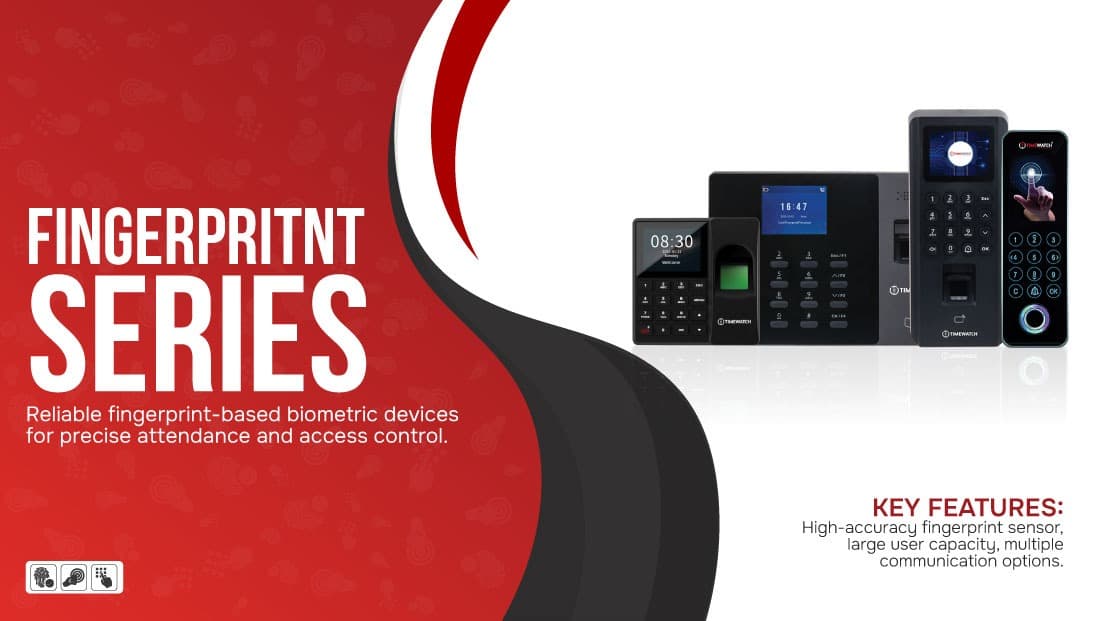
| Fingerprint | Offices, small teams, budget conscious setups | Worn, wet or dusty fingers in factories and construction |
| Face recognition | Factories, hospitals, high traffic gates, touchless needs | Very strong backlight at the entrance |
| Card or PIN | Visitors, temporary staff, backup option | Cards can be shared, so pair them with biometrics |
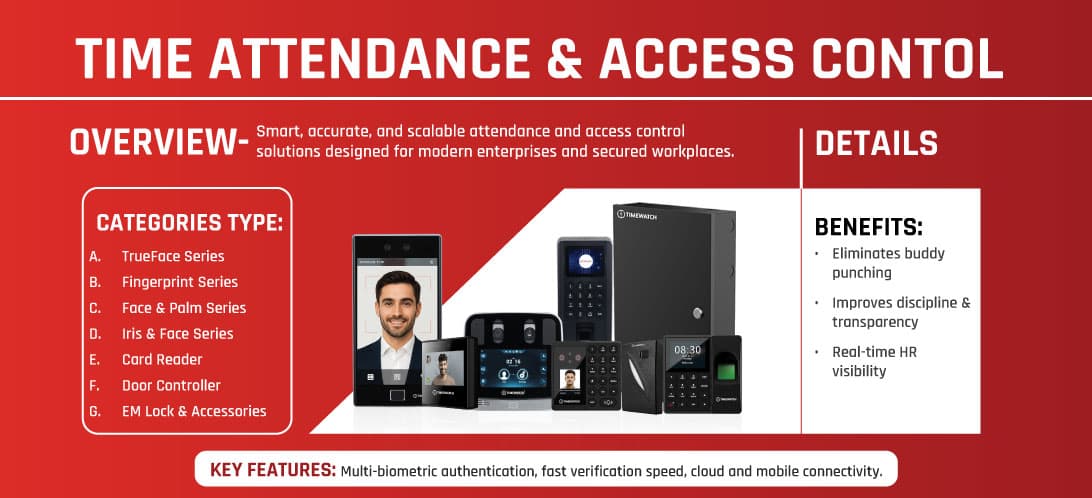
| Palm or iris | High security areas, workers with poor fingerprints | Usually chosen for specific needs |
| Mobile app with GPS | Field sales, service engineers, site staff | Needs a clear policy and employee consent |
Many businesses combine two methods, for example face at the main gate and mobile punching for field staff, so everyone records attendance in one system.
Step 4: What should the attendance software do?
The device only captures a punch. The software turns punches into usable attendance. A good package should handle multiple shifts including night shifts that cross midnight, grace time and late marks, half days, weekly offs and holidays, leave requests with approvals, and regularisation when someone forgets to punch.
Decide between cloud software that managers can open from anywhere and on premise software installed on your own computer. Cloud suits multi location businesses; on premise suits a single site that keeps everything inside its own network. Check the reports too, such as daily attendance, late comers, overtime and monthly summaries.
Step 5: Will it connect to payroll?
If attendance and salary sit in separate systems, someone retypes numbers every month, and mistakes creep in. Look for software that passes payable days, overtime hours, loss of pay and leave balances straight into salary calculation. This matters even more if you run both monthly salaried staff and daily wage workers.
Remember that Indian law requires employers to maintain attendance and wage records, for example under the Factories Act 1948 and the state Shops and Establishments Acts, and India’s four Labour Codes consolidate many of the older labour laws. Biometric data is also personal data under the Digital Personal Data Protection Act 2023, so collect it with consent, use it only for its stated purpose and keep it secure. Confirm the specifics with your legal or compliance advisor.
Step 6: Who will support you after installation?
An employee attendance system runs every single working day, so support matters more than most buyers expect. Ask who installs the devices, who trains your HR team, how quickly a faulty device is attended to, and whether there is a local dealer near your sites. Also ask how you can export your data if you ever need it.
When comparing quotes, look at total cost of ownership rather than the device alone: number of terminals, software licences, installation, cabling, UPS backup, annual support and the hours your HR team spends fixing errors.
How TimeWatch can help
TimeWatch designs and manufactures its own biometric attendance machines in India, so you can match the device to each site. Small offices often start with the Bio-27 for fingerprint, card and PIN, while busy factory gates suit a face attendance machine such as the TrueFace50 for up to 50,000 users or the rugged TrueFaceT50-IND with its powder coated metal body for dusty, outdoor conditions.
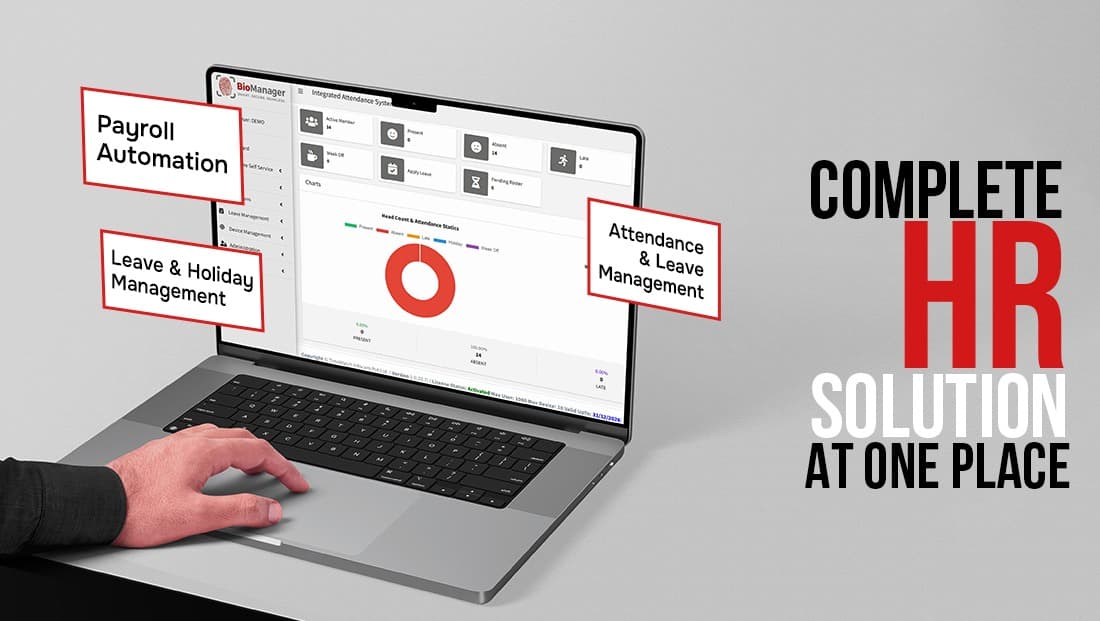
On the software side, BioManager brings every device, branch and mobile user into one web dashboard with real time sync, leave approvals and MIS reports, and it links with TimeWatch attendance and payroll software for salary calculation. Our implementation and helpdesk teams, along with dealers and partners across India, handle setup and ongoing support.
Frequently asked questions
What is the most important factor when choosing an attendance system?
Fit with your workforce matters most. Headcount, number of sites and the working conditions of your staff decide which punch method and software will work reliably day after day.
Is face recognition better than fingerprint for factories?
In many factories it is, because workers’ fingers can be worn, oily or dusty, which makes fingerprint reading harder. Face recognition is also touchless and handles shift changes quickly.
Do I need cloud software for a single office?
Not necessarily. A single site can run on premise software comfortably. Cloud becomes valuable when you have branches, remote managers or field staff.
Can one system handle both permanent staff and contract labour?
Yes, as long as the software supports different shift rules, wage types and reports for each group. Ask to see this during the demo.
How long does it take to set up an attendance system?
It depends on the number of sites, employees and how clean your employee data is. Preparing your employee list and attendance rules in advance speeds it up considerably.
Next step
Keep your headcount, site list and current attendance rules handy, and TimeWatch can recommend a setup that fits. Talk to our team to book a demo, or call +91 95999 53923.