How Accurate Are Biometric Attendance Machines? | TimeWatch
What really decides biometric attendance machine accuracy: sensors, algorithms, enrolment, lighting and worn fingers, plus false accepts and false rejects.
A well chosen, properly installed biometric attendance machine is accurate enough for daily attendance in almost every Indian workplace. But biometric attendance machine accuracy is not a fixed number printed on a box; it depends on the sensor, the matching algorithm, how carefully people were enrolled, the lighting and the condition of your workers’ fingers or faces.
That is why one company swears by its device while another complains that it “never reads anyone”. Often the two are using similar hardware in very different conditions. This article explains what affects accuracy, what false accept and false reject really mean, and how to choose between fingerprint, face, palm and iris for your site.
What do false accept and false reject mean?
Every biometric system makes two kinds of mistakes, and understanding them clears up most confusion:
- False reject: the device fails to recognise a genuine employee. The person has to try again, use a backup method or ask HR to correct the punch. This is annoying but not a security breach.
- False accept: the device wrongly matches one person as another. This is rarer and more serious, because it can record attendance for the wrong employee.
The two are linked. Making a device stricter reduces false accepts but can increase false rejects, and loosening it does the opposite. Manufacturers tune devices to a sensible balance for attendance, and some allow administrators to adjust the threshold. When employees say a machine is “inaccurate”, they nearly always mean false rejects, and those are usually fixable.
Which factors affect biometric accuracy the most?
Here are the main factors, roughly in the order they cause trouble on Indian sites:
| Factor | How it affects accuracy | What helps |
|---|---|---|
| Enrolment quality | Poor or rushed enrolment causes repeated rejections | Enrol carefully, in good light, with multiple samples |
| Worn or damaged fingers | Masons, loaders and chemical workers often have faint prints | Face, palm or iris instead of fingerprint |
| Lighting | Strong sunlight or backlight confuses face cameras | Mount away from direct sun, use devices built for varied light |
| Sensor quality | Better sensors capture clearer images | Choose purpose built attendance hardware |
| Algorithm | Determines how well templates are matched | Modern AI face algorithms handle more variation |
| Dirt, sweat and dust | Affect fingerprint readings | Clean sensors regularly, consider contactless options |
| User behaviour | Wrong finger placement or standing too far | Short training at launch |
| Changes in appearance | Beards, glasses, weight change | Re enrol when needed, use devices that update templates |
Notice that several of these have nothing to do with the device itself. Enrolment and installation account for a large share of real world problems.
How accurate is fingerprint vs face vs palm vs iris?
Each method has strengths, and the right one depends on your workforce rather than a single accuracy ranking:
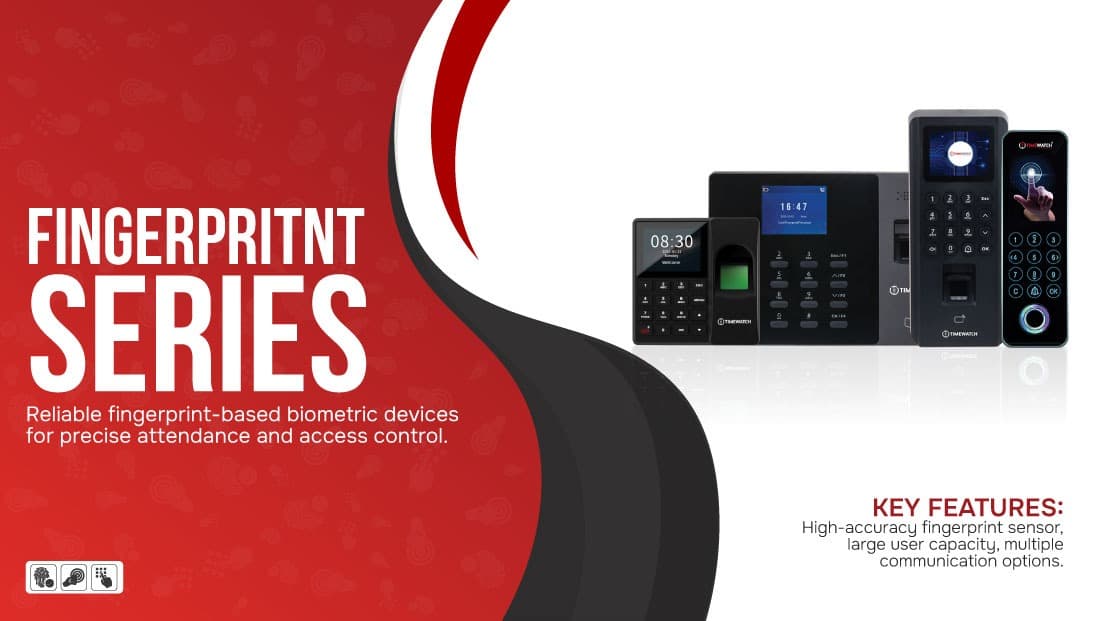
- Fingerprint: dependable for office staff with clean hands. Struggles with worn, cut, wet or very dry fingers, which is common in factories, construction and agriculture.
- Face recognition: contactless and fast, works regardless of finger condition. Modern devices handle low light and moderate changes in appearance. Placement and lighting matter.
- Palm: reads the larger palm area, which helps where fingerprints are faint. Touchless palm options also suit hygiene sensitive sites.
- Iris: the iris pattern is highly distinctive and stable, making it a strong option for high security or very large user bases.
Many businesses avoid choosing just one by using multi modal devices that accept face, palm and fingerprint, plus card or PIN as backup. Our guide to face recognition attendance explains the face option in more depth.
How can you improve accuracy on your existing machines?
Before replacing a device, try these practical steps:
- Re enrol employees who face frequent rejections, using several fingers or capturing the face in proper light.
- Check mounting height and position, and move the device away from strong backlight at gates.
- Clean fingerprint sensors on a regular schedule, especially in dusty sites.
- Give a two minute demonstration to staff on correct finger placement or standing distance.
- Keep firmware and software updated.
- Provide a backup method such as card or PIN for the few people who still struggle.
If rejections continue mainly among manual workers, the method rather than the machine is likely the issue. Switching that group to face or palm usually solves it.
Does accuracy affect compliance and fairness?
Yes. Indian law requires employers to maintain attendance and wage records, for example under the Factories Act 1948 and state Shops and Establishments Acts. Frequent false rejects lead to manual corrections, which weaken the reliability of those records and cause salary disputes. Biometric data is also personal data under the Digital Personal Data Protection Act 2023, so consent, purpose limitation and security matter. Confirm specifics with your legal or compliance advisor.
How TimeWatch can help
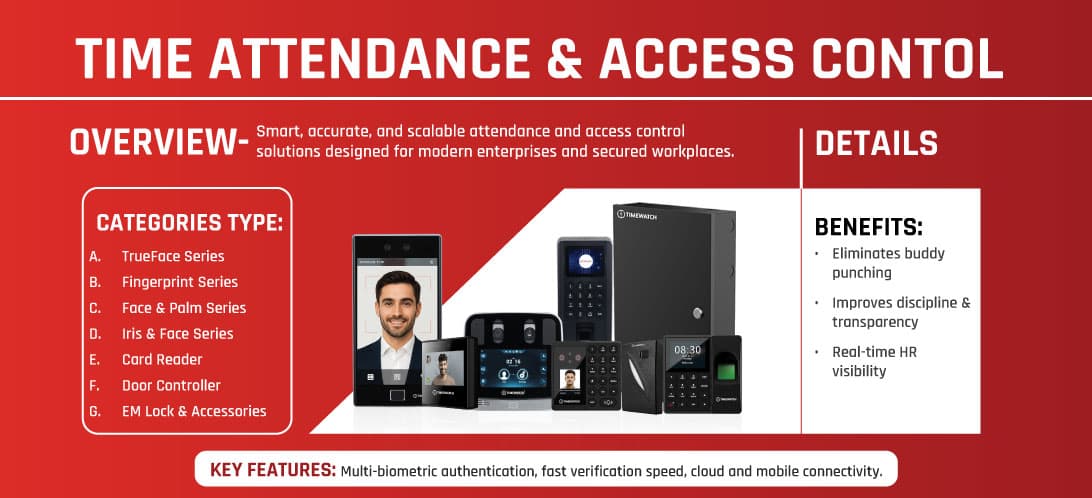
TimeWatch designs devices for real Indian conditions, with in house R&D and manufacturing. For workforces with worn fingers, the Bio-1SE combines face, palm, fingerprint, card and PIN with a built in battery, and the TF-20 offers touchless face and palm. The AI-FaceT7-Pro uses AI face recognition at 0.5 to 2.5 m, while the TW-IriGoPlus adds iris and face for up to 2,00,000 users where security matters most.
Our implementation team helps with mounting and careful enrolment, which is where much of real world accuracy is won. Browse the full range on our biometric attendance machines hub.
Frequently asked questions
Why does my attendance machine reject some employees repeatedly?
The most common causes are poor enrolment, worn or damaged fingers and bad lighting. Re enrolling and switching affected staff to face or palm usually fixes it.
Is face recognition more accurate than fingerprint?
Not universally. Face is more consistent for workers with worn fingers and is contactless, while fingerprint works well for office staff. Multi modal devices let you use both.
What is the difference between false accept and false reject?
A false reject fails to recognise a genuine person. A false accept wrongly matches someone as another person, which is rarer and more serious.
Can I trust vendor accuracy claims?
Treat any single accuracy figure with care, because real results depend on enrolment, lighting and workforce. Ask for a trial at your own site.
Is iris recognition worth it for attendance?
Iris suits high security sites and very large user bases. For most offices and factories, face or multi modal devices are more than sufficient.
Next step
The best way to know how accurate a device will be for your people is to test it on site. Contact TimeWatch to arrange a trial with your own workforce and conditions.