Attendance Tracking vs Time Tracking Explained | TimeWatch
Attendance tracking records presence while time tracking records hours spent on tasks and projects. Learn the difference and when Indian firms need each.
Attendance tracking records whether an employee was present and when they arrived and left, while time tracking records how those working hours were spent across tasks, projects or clients. Attendance answers “Were you here?” and time tracking answers “What did you work on?”
The two terms are often used interchangeably, which blurs the debate around attendance tracking vs time tracking. For an Indian business owner, knowing the difference matters because it decides what you buy, what you ask employees to do, and which numbers end up in payroll and which in client invoices.
What is attendance tracking?
Attendance tracking captures presence. An employee punches in on a biometric device, face terminal or mobile app, and punches out at the end of the day. The software compares those times with the assigned shift and marks each day as present, late, half day, absent or on leave.
Typical outputs include:
- Daily attendance and head count
- Late comers and early leavers
- Leave balances and absences
- Overtime hours beyond the shift
- Monthly payable days for salary
Attendance data is what payroll runs on. It also forms the attendance records Indian employers are required to maintain, for example under the Factories Act 1948 and state Shops and Establishments Acts. Your legal or compliance advisor can confirm what applies to your business.
What is time tracking?
Time tracking captures effort. Within the hours an employee is present, it records how much time went to each task, project, client or activity. This is usually done through timesheets, where employees log hours against project codes, or with timers they start and stop as they switch tasks.
Typical outputs include hours per project, billable and non billable time, utilisation of each team member and comparisons of estimated and actual effort. Time tracking does not usually decide salary for salaried employees. It decides how you bill clients, price future work and spot where projects overrun.
Attendance tracking vs time tracking: what are the key differences?
| Aspect | Attendance tracking | Time tracking |
|---|---|---|
| Core question | Was the employee present, and when? | How were working hours spent? |
| Data captured | Punch in and punch out times | Hours per task, project or client |
| How it is recorded | Biometric device, face terminal, mobile app | Timesheets, timers, project tools |
| Main users | HR, admin, payroll, plant heads | Project managers, finance, delivery heads |
| Feeds into | Payroll, statutory records, shift planning | Client billing, project costing, utilisation |
| Verification | Strong, tied to identity and location | Mostly self reported by employees |
The last row is important. Attendance can be verified with biometrics or geo fencing. Time tracking relies largely on employees logging honestly, which is why it works best in a culture of trust and regular review.
Which Indian businesses need attendance tracking?
Almost every business with employees benefits from attendance tracking. It is essential for:
- Factories and manufacturing units running multiple shifts with contract labour
- Hospitals and clinics with round the clock duty rosters
- Schools and colleges tracking teaching and non teaching staff
- Retail chains and showrooms with staff across many branches
- Construction firms managing workers at changing sites
- Offices of every size that pay monthly salaries based on presence
For these businesses, the priority is accurate presence, correct overtime and a clean link to payroll. Biometric records also bring personal data responsibilities under the Digital Personal Data Protection Act 2023, so consent and secure storage should be part of the setup.
When do you also need time tracking?
Time tracking becomes valuable when hours themselves are what you sell or cost. That includes IT services firms billing clients by the hour, architecture, design and engineering consultancies, chartered accountant and legal practices, marketing agencies managing retainers, and any business costing projects by labour hours.
A factory may also track machine or job card hours for costing, but that usually sits in production systems rather than HR software.
Many firms need both. A software services company in Bengaluru or Pune still needs attendance for payroll, leave and office access, and time tracking for client billing. The two systems answer different questions, and neither replaces the other. A common mistake is using timesheets as a substitute for attendance. Self reported hours are not reliable proof of presence and should not drive salary deductions on their own.
How TimeWatch can help
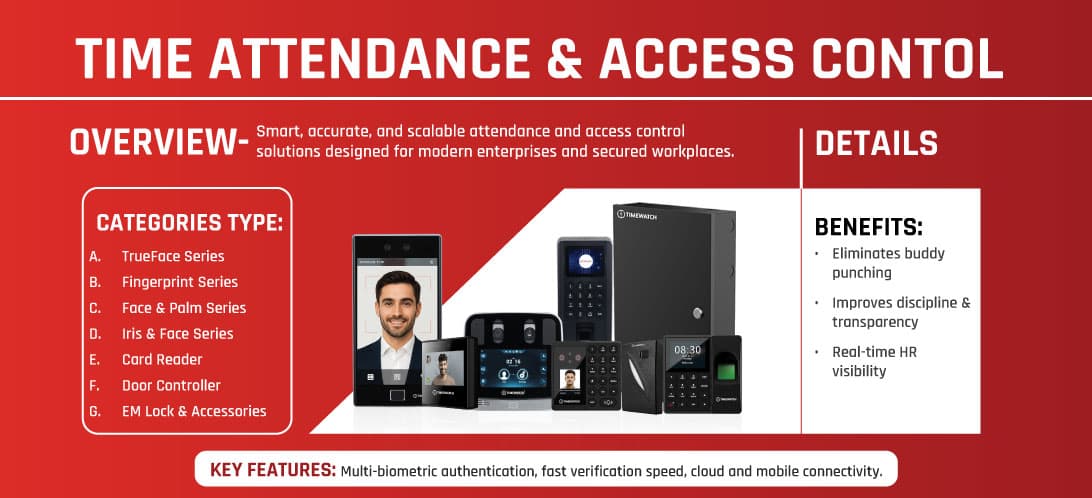
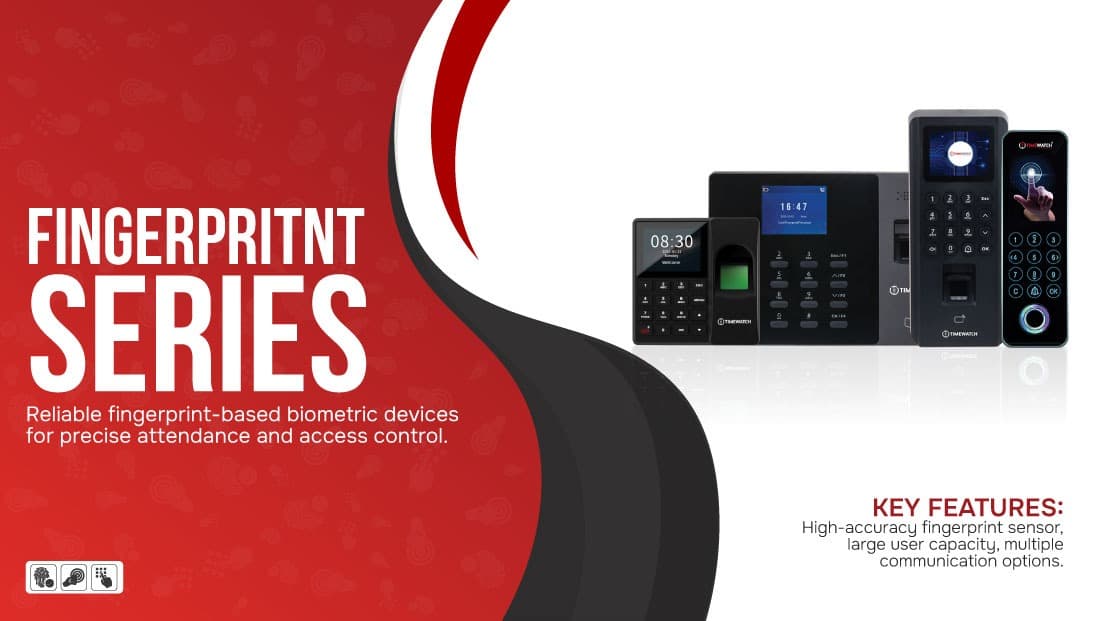
TimeWatch focuses on the attendance side, which is the foundation for payroll and statutory records. Our biometric attendance machines, from the Bio-4 fingerprint terminal to face terminals such as the TrueFace6000 with PoE, capture verified presence at every gate.
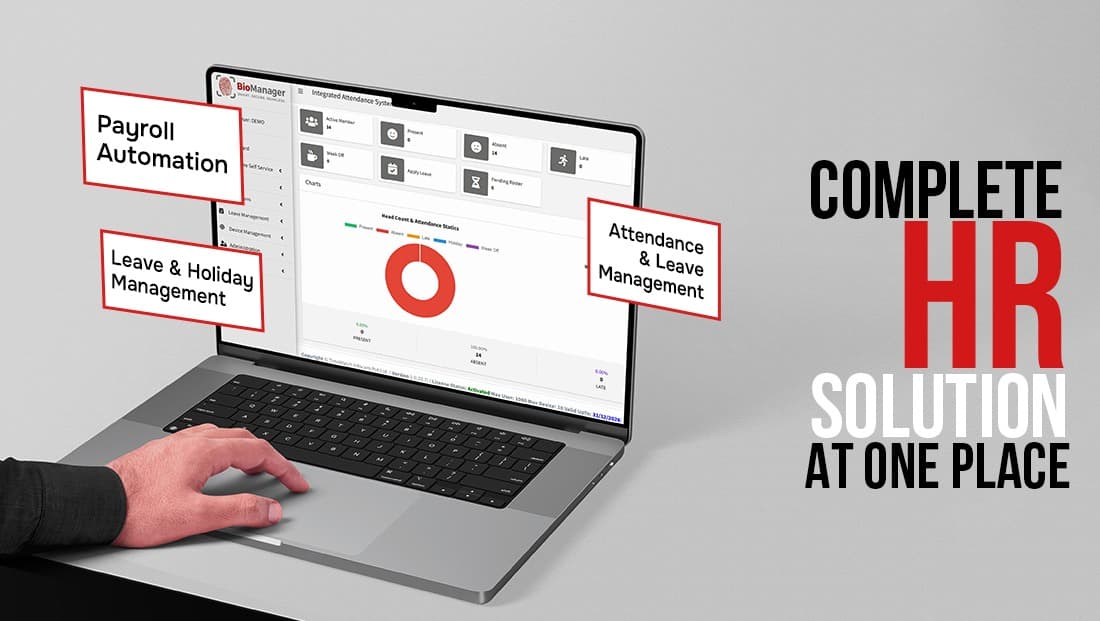
BioManager turns those punches into shifts, late marks, overtime and leave, with daily head count and MIS reports, and passes the results to TimeWatch attendance and payroll software. For teams that work outside the office, our field staff tracking solution records check in location, time and route, giving managers a clear picture of the working day.
Frequently asked questions
Is attendance tracking the same as time tracking?
No. Attendance tracking records presence and working hours at a workplace, while time tracking records how those hours are split across tasks or projects.
Which one is used for salary calculation?
Attendance tracking. Payable days, leave, overtime and loss of pay all come from attendance data.
Do small businesses need time tracking?
Only if they bill clients by the hour or need to cost projects by labour. Most small businesses need attendance tracking first.
Can timesheets replace a biometric attendance system?
They should not. Timesheets are self reported, while biometric attendance verifies that the employee was actually present.
Next step
If you are sorting out the attendance foundation for payroll, get in touch with TimeWatch for a demo of BioManager configured with your own shift rules.