Can Attendance Software Reduce Payroll Errors? | TimeWatch
Most payroll errors begin with attendance data. Learn where mistakes come from and how attendance software linked to payroll fixes them at the source.
Yes. Most payroll errors in Indian companies are not calculation mistakes at all; they are attendance mistakes that travel into the salary sheet, and attendance software payroll errors drop sharply once punches, leave and overtime flow into payroll automatically instead of being copied by hand. Software will not fix a wrong salary structure, but it removes the guesswork that causes most disputes on salary day.
If your HR team still reconciles a register, a leave file and overtime notes at month end, every handoff is a chance for a figure to slip. Here is where those slips happen and what changes when attendance and payroll connect.
Where do payroll errors actually come from?
Short salary complaints usually trace back to a few familiar problems:
- Manual registers. Signatures added later, illegible entries, a page missing after the monsoon leak in the security cabin. Whatever is written becomes the basis for pay.
- Overtime miscounts. A supervisor notes “2 hours extra” on a slip, the actual exit was 40 minutes later, and nobody can prove either version.
- Loss of pay (LOP) errors. Half days, late marks and unapproved absences are counted differently by different people, so LOP deductions vary month to month.
- Leave mismatches. Leave approved on WhatsApp or email never reaches the payroll sheet, so the employee is marked absent and loses a day’s pay.
- Copy and paste mistakes. Data moved from a device export into a spreadsheet, then into the payroll file, picks up wrong rows, shifted columns and duplicate names.
None of these are about tax slabs or PF formulas. The input is wrong before the calculation begins.
How does linked attendance software fix these problems?
The idea is simple: capture attendance once, at the point of entry, and let the same record feed every later step. When a biometric or face terminal records an in time and out time, the software applies the shift rule, works out late coming, early going and overtime, and checks the day against approved leave and holidays. Payroll then reads those final figures directly.
Here is how each error source changes:
| Error source | With manual process | With linked attendance and payroll |
|---|---|---|
| Register entries | Handwritten, easy to alter | Device punch with date, time and identity |
| Overtime | Supervisor’s estimate | Calculated from actual punches against shift end |
| LOP | Counted by hand each month | Applied by fixed rules for absence, half day, late marks |
| Leave | Approved outside the system | Approved inside the software, reflected in attendance |
| Data transfer | Typed again into payroll file | Read directly by payroll |
Because rules are configured once, every employee is treated the same way, and that consistency reduces disputes.
What about contract labour and daily wage workers?
Factories and construction sites often mix permanent staff with contract labour paid daily or weekly. Register errors are most common here, because head counts change daily and the contractor’s sheet rarely matches the gate log.
Attendance software that supports daily wage payroll lets you set a per day rate, record actual days worked from device punches, and generate a wage summary for the contractor and your own audit. When a contractor bills for 120 man days and your terminal shows 112, you have a clear record to discuss rather than an argument.
Which settings matter most for payroll accuracy?
Before your first payroll run, check these points with your implementation team:
- Shift definitions. General, night and rotating shifts with grace time and break rules that match your actual policy.
- Overtime policy. Whether OT starts after shift end or after a minimum extra duration, and whether it needs approval.
- Half day and late mark rules. For example, how many late marks equal a half day of LOP.
- Weekly offs and holidays. Branch wise holiday lists, since a Chennai office and a Delhi plant will differ.
- Leave types and balances. Opening balances entered correctly, so the first month does not throw false absences.
- Approval flow. Who approves leave, out duty and missed punch requests, so nothing sits outside the system.
Getting these right in week one saves corrections later.
Can software remove every payroll error?
Honestly, no. A forgotten punch with no correction request still leaves a gap, and a wrongly entered salary structure gets calculated wrongly every month. And payroll decisions such as arrears, special allowances and statutory deductions still need a trained person to review them.
What changes is the work HR does: instead of building attendance from scratch, the team reviews exceptions such as missed punches, pending approvals and unusual overtime. Indian law also expects employers to maintain proper attendance and wage records, and a digital trail makes those records easier to produce, though you should confirm the exact requirements for your establishment with your legal or compliance advisor.
How TimeWatch can help
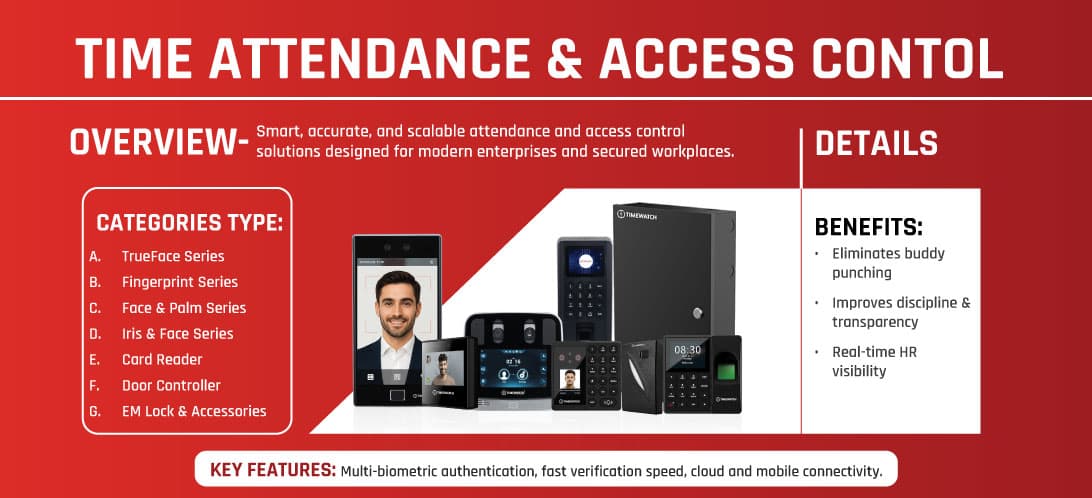
TimeWatch builds both ends of this chain. On the capture side, our biometric attendance machines such as the Bio-4 for fingerprint, card and PIN, and face attendance terminals such as the TrueFace50 for larger workforces, record identity based punches that are hard to fake or alter.
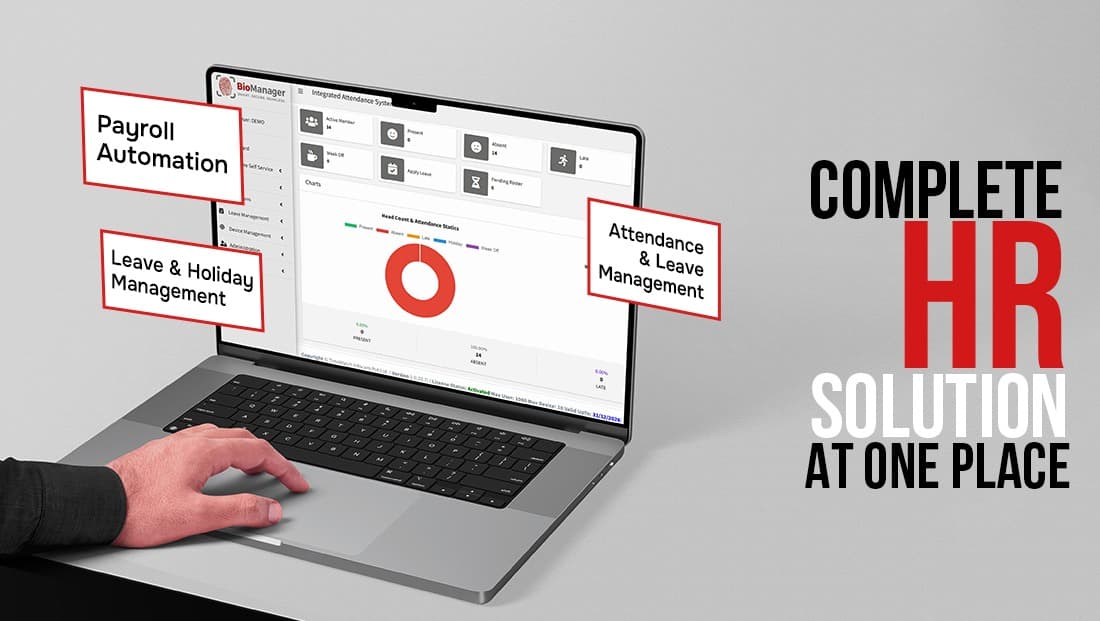
On the payroll side, BioManager and the TimeWatch Payroll Management module handle attendance and payroll together. Payroll Management automates salary calculation with overtime, leave and holiday integration, supports both monthly and daily wage payroll, manages loans and advances, sends salary slips by PDF and email, and keeps audit logs so you can see who changed what. BioManager adds multi level leave approval and leave and out duty requests through the mobile app, so approvals land in the system rather than in a chat window.
Frequently asked questions
Does attendance software calculate overtime automatically?
Yes, once your overtime rule is configured. The software compares actual out punches with the shift end time and applies your minimum duration and approval settings, so OT is based on recorded time rather than estimates.
How does the software handle a missed punch?
The employee or supervisor raises a correction request, which goes to the approver set in the system. Once approved, the attendance record updates and payroll picks up the corrected figure, with the change logged.
Can it handle different rules for staff and contract workers?
Yes. You can define separate shift, overtime and payroll settings for groups such as permanent staff, contract labour and daily wage workers, so each group is calculated by its own rules.
Will we still need someone to check payroll?
Yes. Software removes repetitive counting and retyping, but a person should still review exceptions, new joiners, exits and statutory deductions before salaries are released.
Is it difficult to move our existing leave balances into the system?
No. Current balances are entered once as opening balances during setup, and the system tracks accruals and usage from then on.
Next step
If salary day in your company still begins with a stack of registers, it is worth seeing how linked attendance and payroll would work with your own shift rules. Talk to the TimeWatch team for a demo based on your workforce mix and branch setup.